Share your photos, tips and experiences from Trnava and its surroundings.
Join the group ↗
Things to do in Trnava
Trnava is a compact historic city in western Slovakia, known for its churches, medieval walls and walkable old town. Nicknamed “Little Rome”, it is easy to explore on foot: in just a few hours you can see the Main Street, Trinity Square and the City Tower, St Nicholas Basilica, St John the Baptist Cathedral and some of the best-preserved sections of the city walls.
If you are visiting Trnava for the first time
Start at the railway station
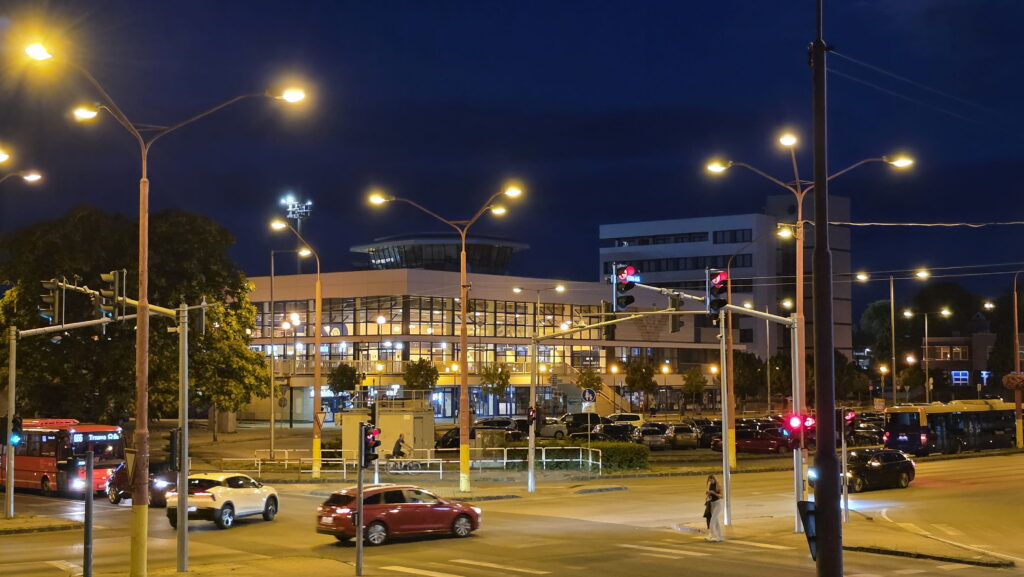
From the station, a pedestrian footbridge takes you straight to the edge of the city centre. From there, continue through SNP Square to the Main Street.
Explore the historic centre on foot
The main sights are close together. From the City Tower, you can reach the basilica, city walls, cathedral and other interesting places within a few minutes.
How much time do you have?
If you only have a few hours in Little Rome, follow the Main Street through Trinity Square and the surrounding sights. If you are staying for a weekend, you will have time for quieter corners, parks, culture and a slower pace.
How to walk through the centre of Trnava
Whether you arrive by train, bus or park near the railway and bus stations, cross the footbridge and you will reach the functionalist Evangelical Church and SNP Square. Before entering the Main Street, you can make a short detour to the Juraj Fándly Library and the Rose Park. The renovated park has the Trnávka stream, fountains, green spaces and the restored Emmer Villa. Football fans can also visit the nearby City Arena complex with Anton Malatinský Stadium and a large shopping centre.
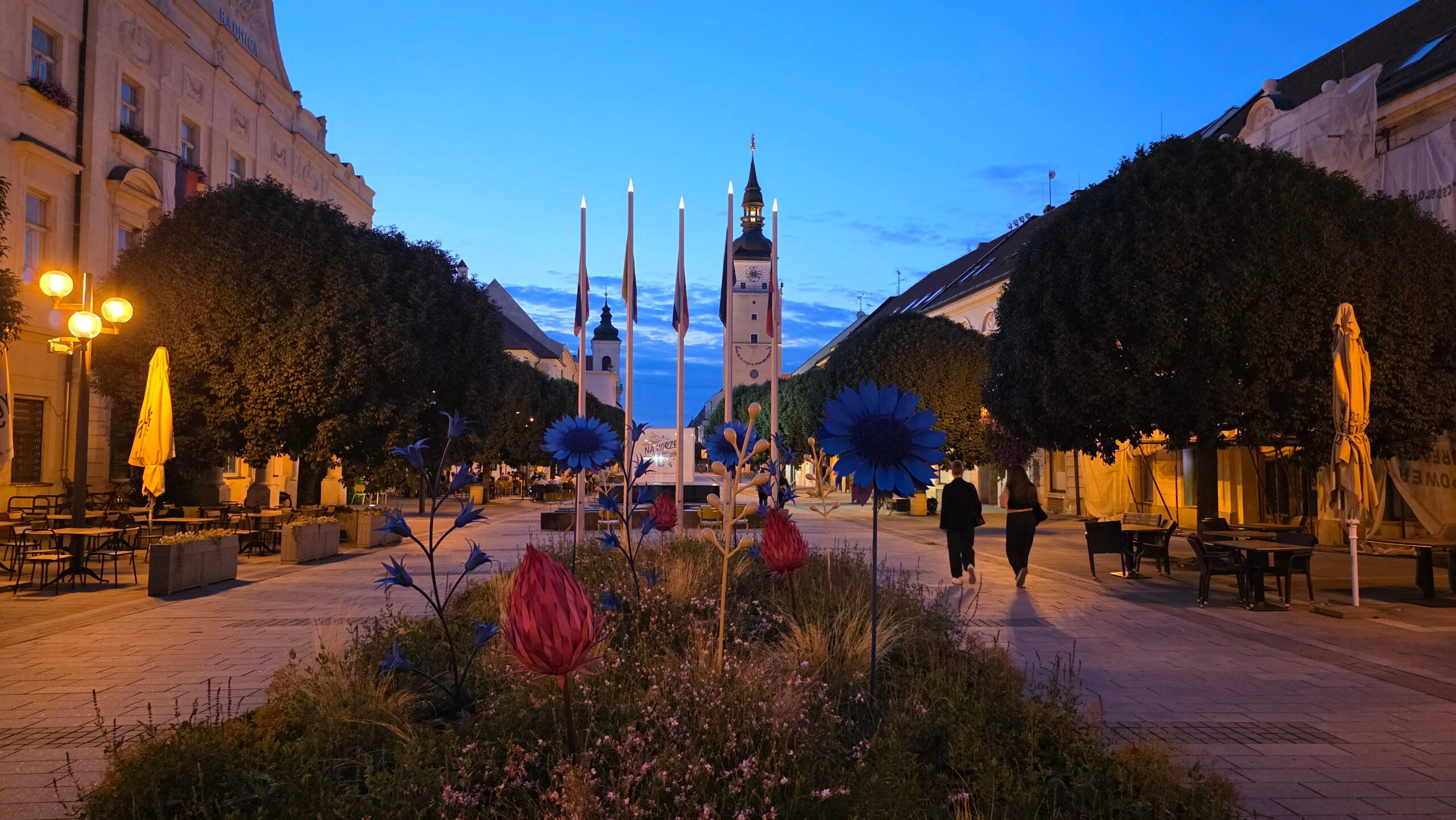
The Main Street is the pedestrian spine of the city centre. Alongside historic houses, you will find cafés, restaurants, terraces, greenery and fountains, as well as the Gothic Church of St Helena. At its northern end, several major sights stand almost side by side: the Town Hall, Ján Palárik Theatre, Trinity Square and the City Tower.
From here, you can continue in three directions. A short detour along Divadelná Street leads to the Church of St James and Bernolák Gate, behind which lies Anton Bernolák Park, known locally as the Promenade. Alternatively, continue along Štefánikova Street past historic houses and the Church of the Holy Trinity. Across Trinity Square, you can reach Hviezdoslavova Street and the Church of St Anne.
Next comes Mikuláš Schneider-Trnavský Street, one of the most atmospheric streets in the historic centre. At its end stands St Nicholas Basilica beside the Archbishop’s Palace. Behind the basilica, you can walk directly to the medieval fortifications and even climb onto the wall at one of the accessible sections.
From the basilica, follow Michalská Street towards the Northern Tower, which has a restaurant at the top, or take Jeruzalemská Street to University Square and St John the Baptist Cathedral. From there, continue to Bela IV Park, a quiet green space beside the northern city walls with benches and another access point onto the fortifications. If you head in the opposite direction from the basilica via Kapitulská Street, you will reach the West Slovak Museum.
TIP: Click the icon in the top-left corner of the map and choose either the short or the longer Trnava walking route. You can also switch individual categories of places on and off. The shorter walk is shown by default.
Sights and landmarks in Trnava
Most of Trnava’s best-known sights are concentrated in the historic centre, so you can comfortably explore them on foot.
City Tower and Trinity Square
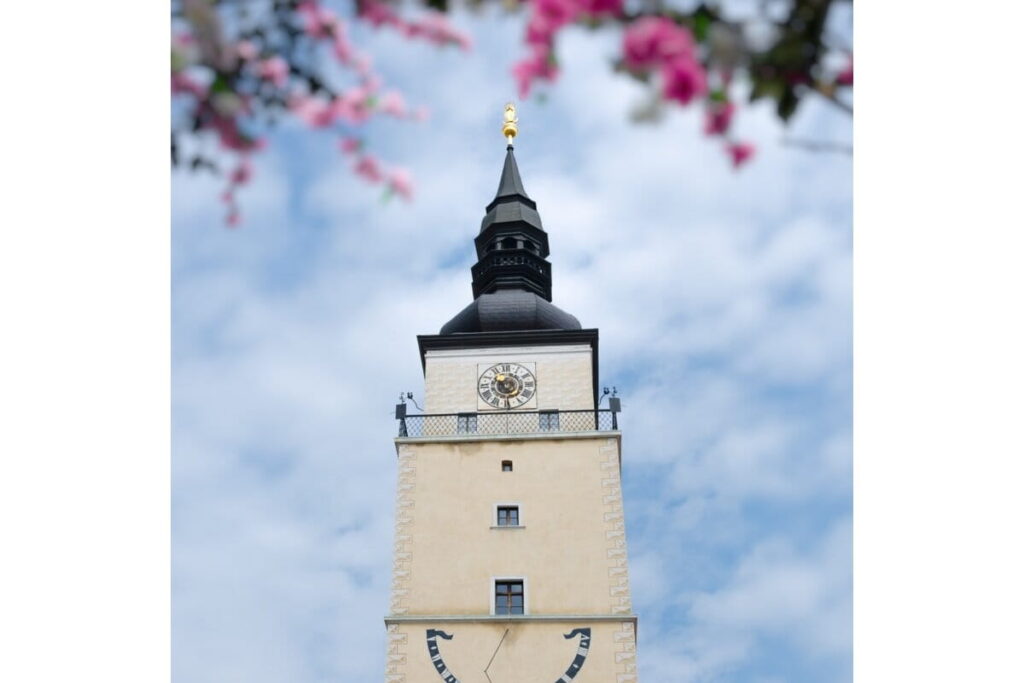
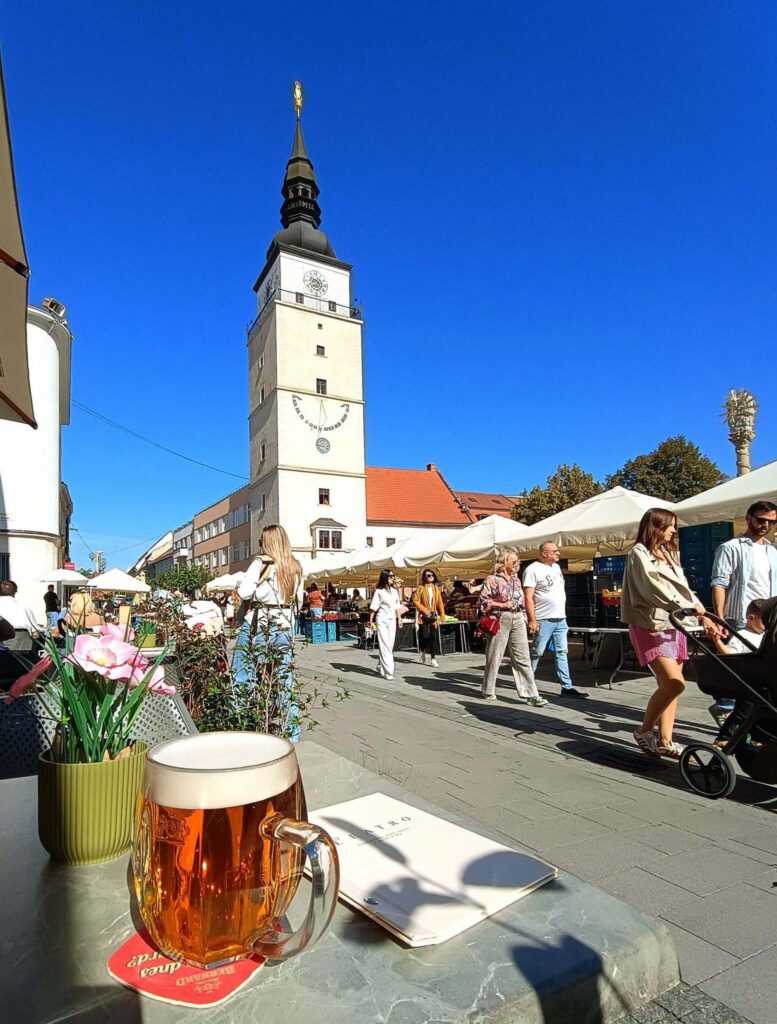
The Renaissance City Tower is the most recognisable landmark in the centre and one of the best places to see Trnava from above. It stands directly on Trinity Square beside the Holy Trinity Column, and the tourist information centre is located on its ground floor.
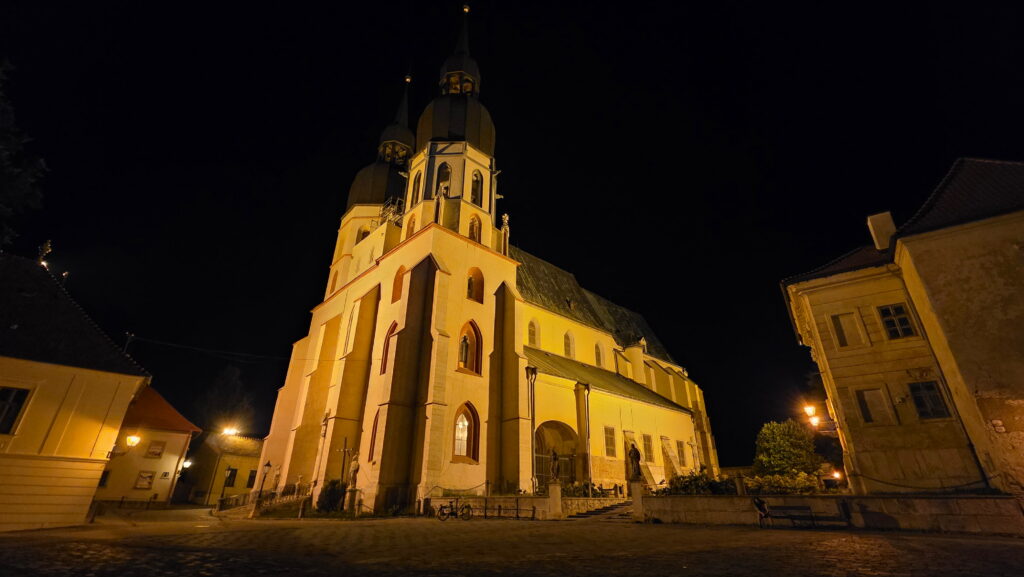
St Nicholas Basilica
The Gothic St Nicholas Basilica stands in the oldest part of Trnava and is one of the city’s most important sacred monuments. It houses the revered image of Our Lady of Trnava, while the city walls can be reached directly behind the church.
St John the Baptist Cathedral
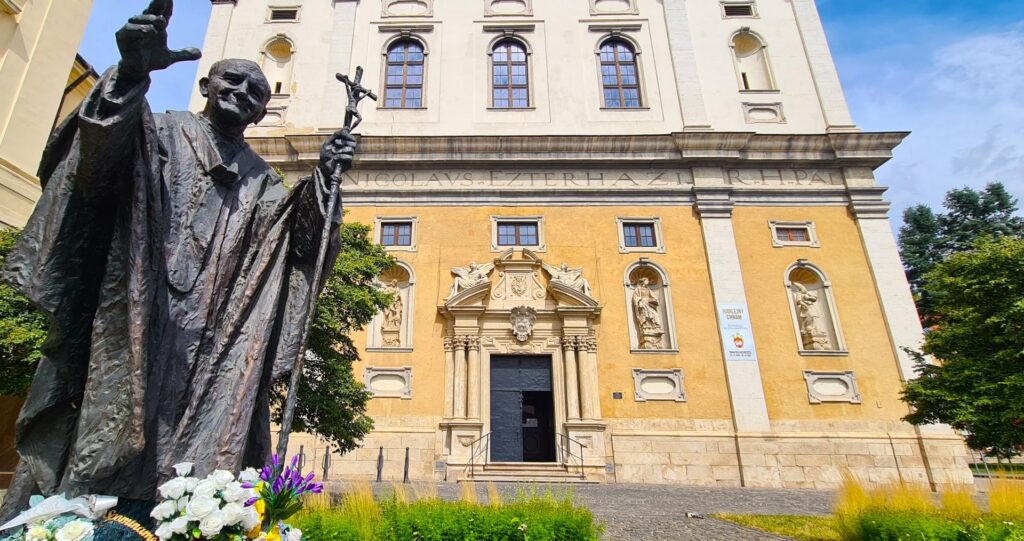
The monumental St John the Baptist Cathedral was built in the 17th century as part of the former university complex. Its most striking interior feature is the wooden main altar from 1640, rising to more than twenty metres.
City walls
Trnava’s brick fortifications date back to the 13th century. The original system stretched for around three kilometres, included 35 towers and had walls reaching roughly ten metres in places. About two thirds of the fortifications survive today, and several sections can be climbed.
Town Hall
Trnava Town Hall is not a single building from one period, but a complex combining Gothic, Baroque and later elements. Its western wing is particularly interesting, with preserved spaces once used by the medieval town administration and prison.
Ján Palárik Theatre
The historic theatre building on Trinity Square dates from 1831 and is among the oldest surviving theatre buildings of its kind in Slovakia. It is not merely a monument: performances are still held here regularly, making it one of the city’s main cultural venues.
Church of St James
The Franciscan Church of St James dates back to the 14th century and contains more altars than any other church in Trnava. It is only a short detour from Trinity Square and stands close to Bernolák Gate.
Evangelical Church
Built in 1924, the Evangelical Church is a striking example of modern architecture in a city better known for older churches. Its unusual semicircular plan and three-tower façade can be seen almost immediately when approaching the centre from the railway station.
Status Quo Ante Synagogue
This twin-towered synagogue from the late 19th century is distinguished by architecture with Oriental influences and is one of the strongest reminders of Trnava’s Jewish history. Today, the Ján Koniarek Gallery uses it as a Centre for Contemporary Art. A second synagogue, now home to a café, stands only a few metres away.
Streets, terraces and city life
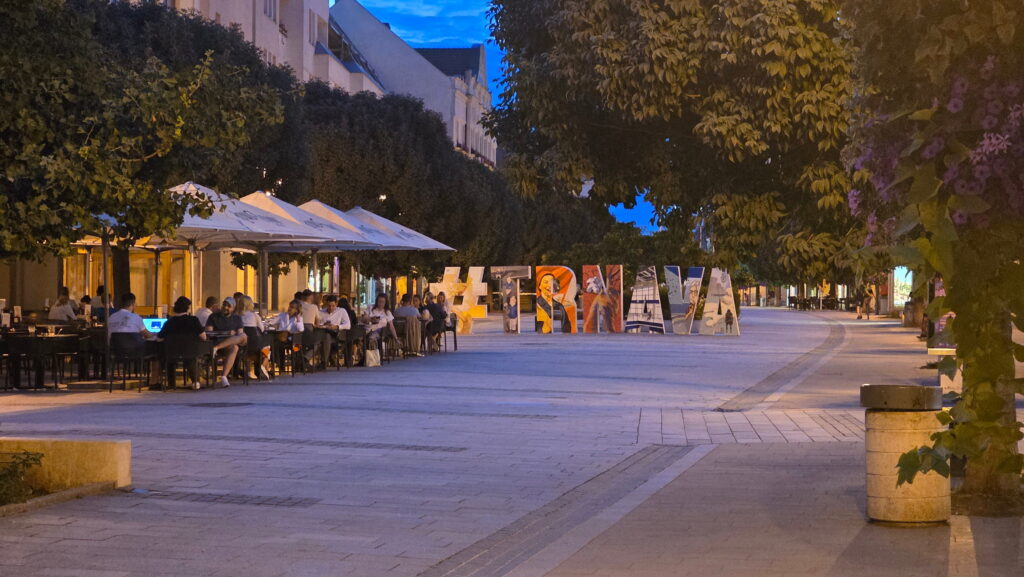
Trnava is worth experiencing between the individual sights as well. Main Street, Trinity Square, Štefánikova, Divadelná, Hviezdoslavova and Halenárska streets form the livelier part of the centre, with cafés, restaurants, terraces and shops. Towards the basilica, the atmosphere becomes quieter and more historic, especially along Mikuláš Schneider-Trnavský, Jeruzalemská and Kapitulská streets.
Near Štefánikova Street, stop at Nádvorie, a restored complex of historic townhouses combined with contemporary architecture, gastronomy and cultural events. It is also home to the Malý Berlín cultural centre.
The centre regularly comes alive with markets and events. The city market is held on Trinity Square or the Main Street, while larger annual events include Májový kvet, Trnavská brána, Trnavský jarmok and the Advent markets.
Culture: museums, galleries and theatres
If you want to spend part of your visit indoors, the main museum is the West Slovak Museum, housed in the former Poor Clares monastery. It also manages the Museum of Book Culture in the Oláh Seminary and the Mikuláš Schneider-Trnavský House of Music.
The Ján Koniarek Gallery uses both the Koppel Villa and the Synagogue – Centre for Contemporary Art, allowing you to combine exhibitions with two architecturally interesting buildings.
Theatre is represented by the long-established Ján Palárik Theatre and the newer Pracháreň Municipal Theatre on Radlinského Street. Contemporary culture is complemented by Malý Berlín, which hosts concerts, theatre, discussions, literature and other events.
Next to the Rose Park is the Juraj Fándly Library, which offers a garden reading area as well as regular cultural and community events.
Parks and places to relax
Trnava lies on a flat plain, so unlike much of Slovakia there are no hills in the city. Instead, the centre stands out for its parks, tree-lined spaces and easy access to greenery.
SNP Park
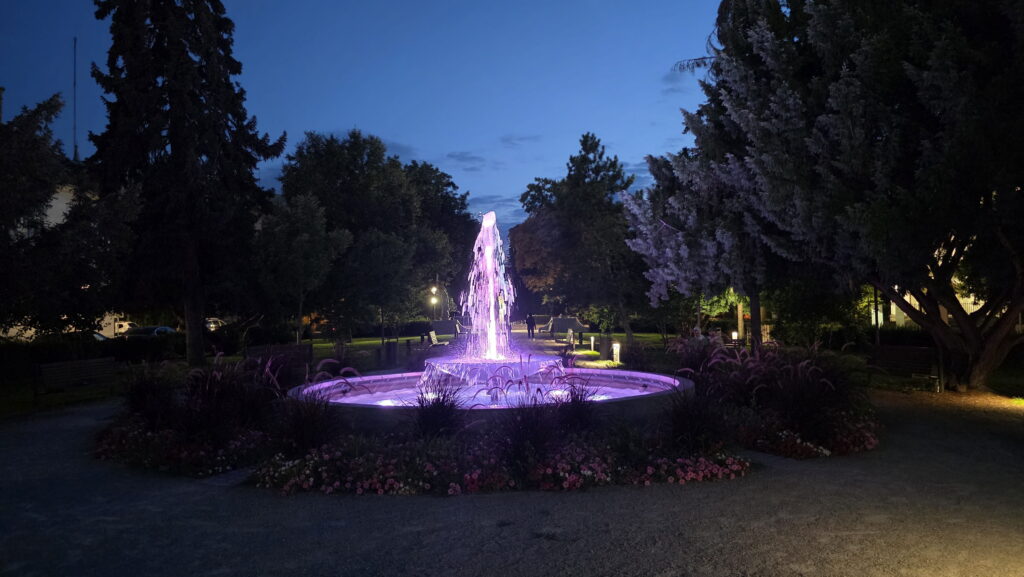
SNP Park lies beside SNP Square and forms a green gateway to the Main Street when arriving from the railway station. A colourful fountain creates a particularly pleasant atmosphere in the evening, and the park also contains several statues, including one of Milan Rastislav Štefánik.
Rose Park
The renovated Rose Park is one of the most attractive public spaces near the centre. It includes the Trnávka stream, fountains, greenery, relaxation areas and the restored Emmer Villa. The park is only a few minutes from the railway station and the Main Street, close to City Arena.
Anton Bernolák Park – Promenade
Anton Bernolák Park, known locally as the Promenade, runs alongside the western section of the historic fortifications. It is a good choice if you want to combine a green walk with views of the city walls and Bernolák Gate.
Bela IV Park
Bela IV Park lies directly beside the northern city walls, only a few minutes from the cathedral. It is smaller and quieter, with comfortable seating and another place where visitors can climb onto the fortifications.
Agátka
A few minutes’ walk from the historic centre, the large revitalised Agátka park lies in the Družba residential district. It has a pond, an artificial stream, plenty of greenery, children’s playgrounds and sports areas, making it particularly suitable for families.
Kamenný mlyn
If you have more time, the Kamenný mlyn recreation area is the best option for a longer walk. It connects to the Trnava Ponds and an educational trail and includes a natural amphitheatre, playgrounds, woodland and other leisure areas. City bus line 8 runs here from the railway station.
Štrky recreation area
On the northern edge of the city, the Štrky recreation area has an artificial lake, woodland, benches, a shelter, several public fire pits and an educational trail. It is not within immediate walking distance of the historic centre. From the railway station, take bus line 2 to the Nemečanka terminus and continue for roughly 15 minutes on foot.
What can you see in Trnava in 2 hours, half a day or a full day?
About 2 hours
From the station, walk to the Main Street and continue through Trinity Square to the City Tower, St Nicholas Basilica, the city walls and St John the Baptist Cathedral. The route works well even without entering the interiors.
Half a day
Add a climb up the City Tower, a longer walk along the walls and one indoor visit according to your interests – a museum, gallery or church. You can also stop at the Rose Park or Nádvorie along the way.
A full day
Explore the historic centre without rushing, visit one or two cultural institutions, allow time for lunch or a café and finish in one of the parks. If you want to go beyond the centre, add Kamenný mlyn or Štrky.
Explore Trnava by interest
Basilicas, the cathedral, historic churches, monasteries and other sacred buildings in central Trnava.
The City Tower, city walls, Town Hall, historic buildings and other traces of Trnava’s past.
Trinity Square, the Main Street, Mikuláš Schneider-Trnavský Street, Kapitulská Street and other interesting parts of the centre.
Exhibitions focused on history, art, music and book culture, as well as spaces presenting contemporary art.
Rose Park, the Promenade, Bela IV Park, Agátka, Kamenný mlyn, Štrky and other places to relax.
Viewpoints, city tours, cultural events, football and other ways to experience Trnava actively.
Playgrounds, parks, attractions and activities suitable for a family visit.