
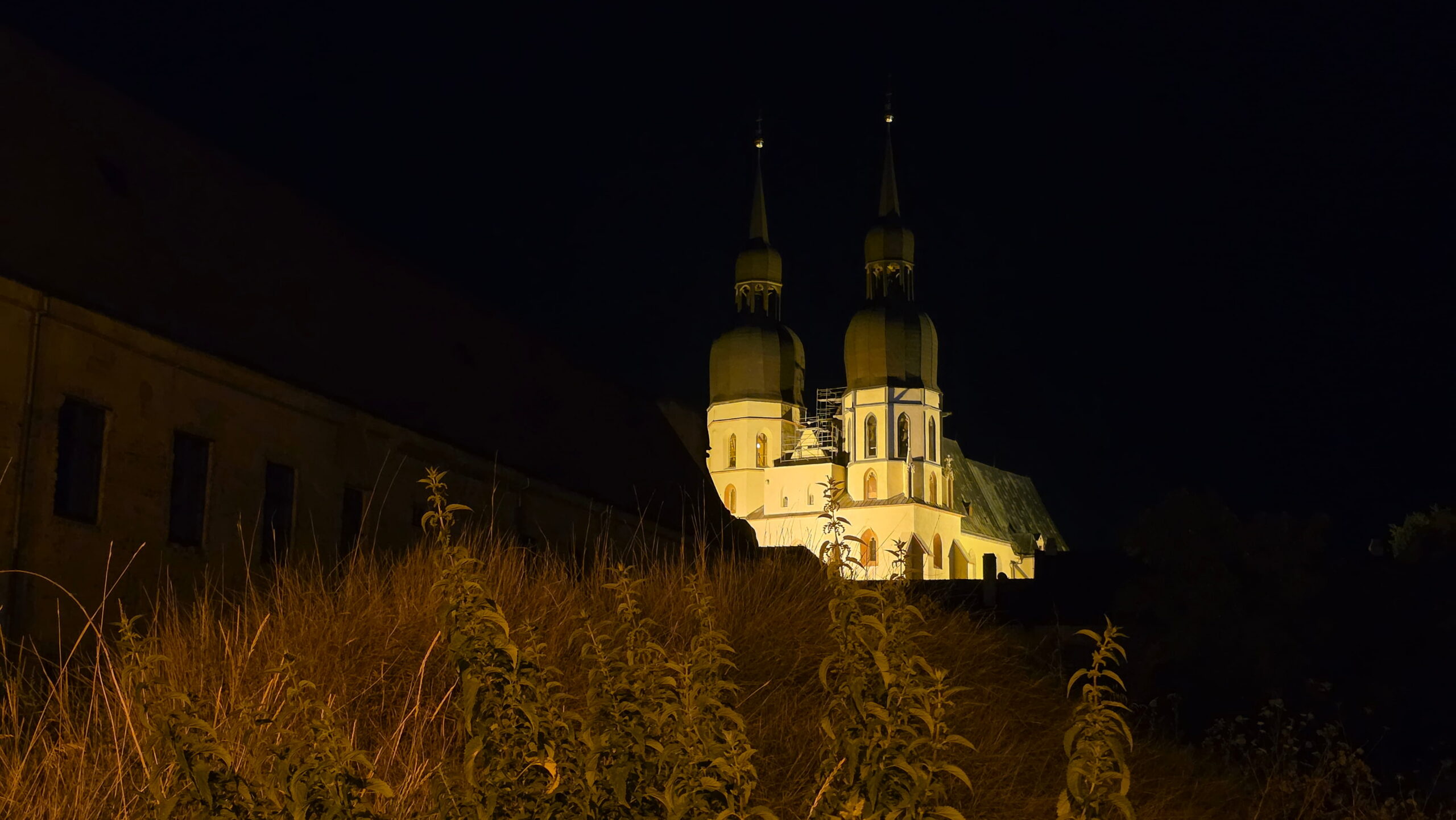

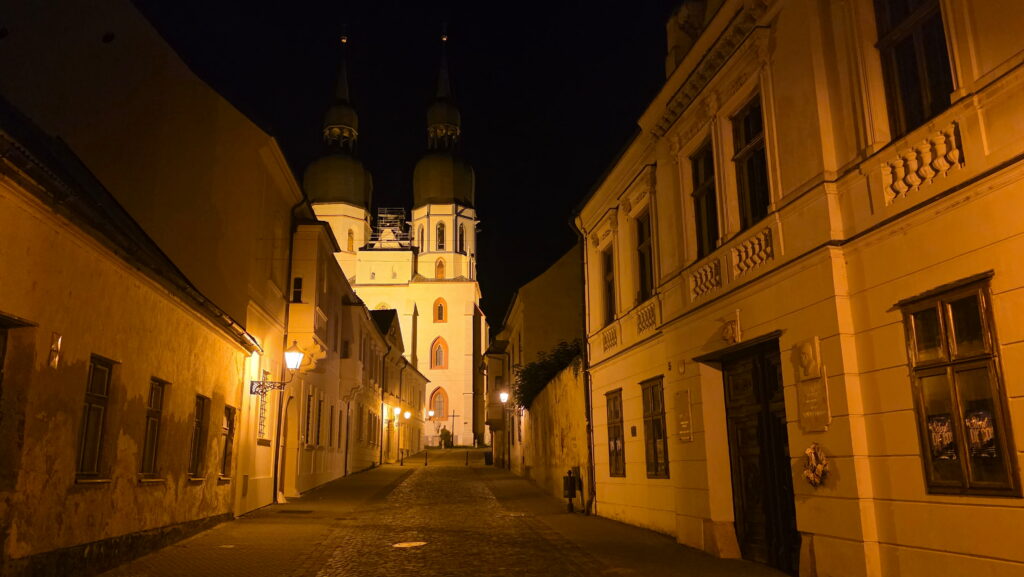
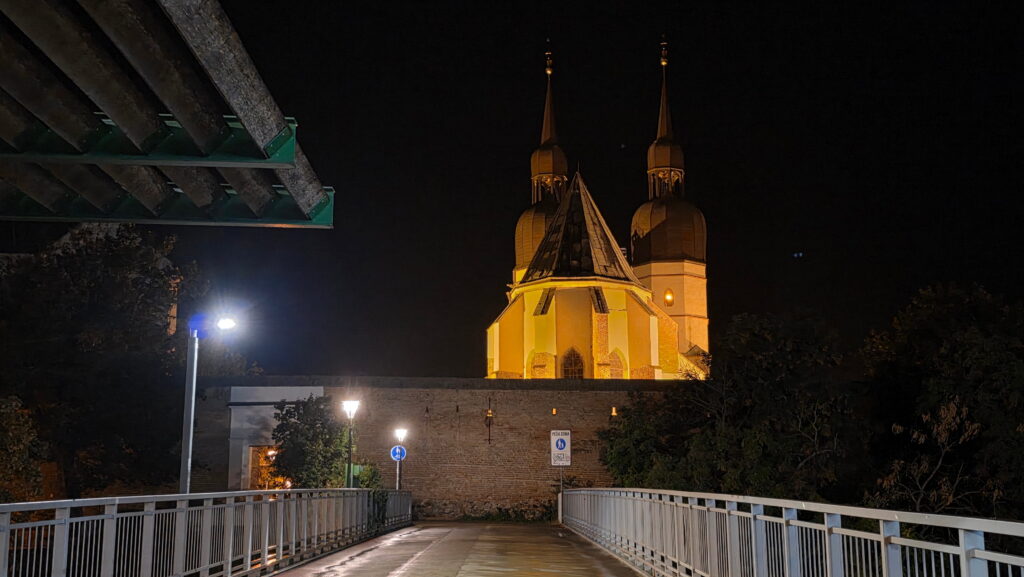
The Gothic Basilica of St. Nicholas is one of Trnava’s most important religious monuments. Built on the site of an older Romanesque church, it served as the cathedral of the Archbishops of Esztergom for almost three centuries and is now an important Marian pilgrimage site.
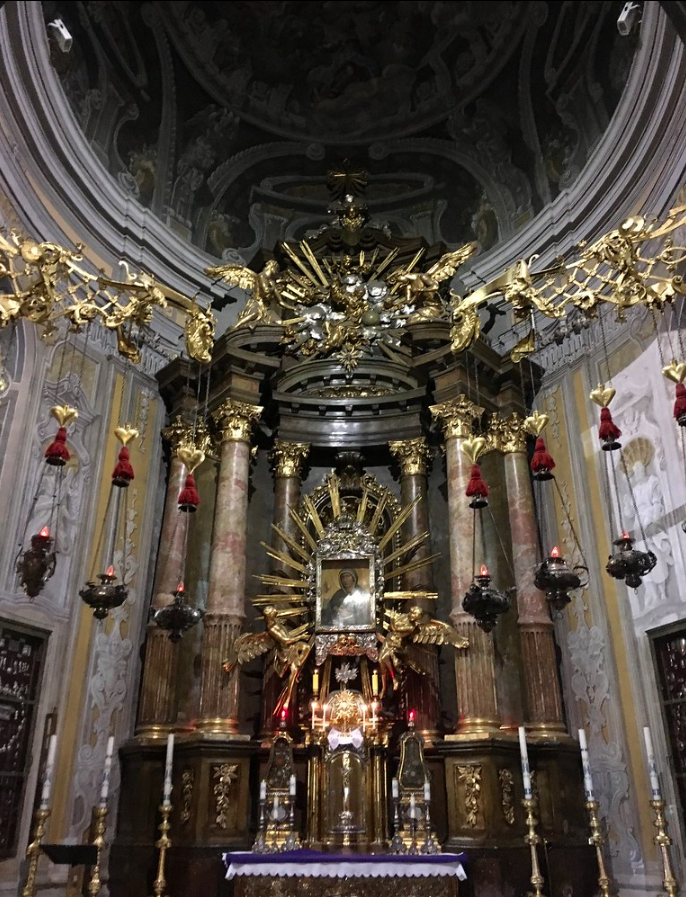
Its interior combines medieval Gothic architecture with later Baroque chapels, historic altars, frescoes and epitaphs. The most important pilgrimage site inside the church is the chapel housing the image of Our Lady of Trnava.
1380 – 1421
Construction of the present Gothic church
1543 – 1820
Cathedral of the Archdiocese of Esztergom
60 m
Length of the building
2008
Granted the title of minor basilica
Why visit the Basilica of St. Nicholas
The Basilica of St. Nicholas is one of the best places to discover the religious history of Little Rome. Gothic architecture, Baroque chapels, medieval frescoes, historic organs and reminders of the period when Trnava was the seat of the Archbishop of Esztergom all come together under one roof.
A special place within the basilica is occupied by the image of Our Lady of Trnava, which has been associated with an important local pilgrimage tradition for several centuries. The church remains an active parish church and continues to host regular Masses, pilgrimages and concerts.
Photo gallery

A Gothic church with Baroque chapels
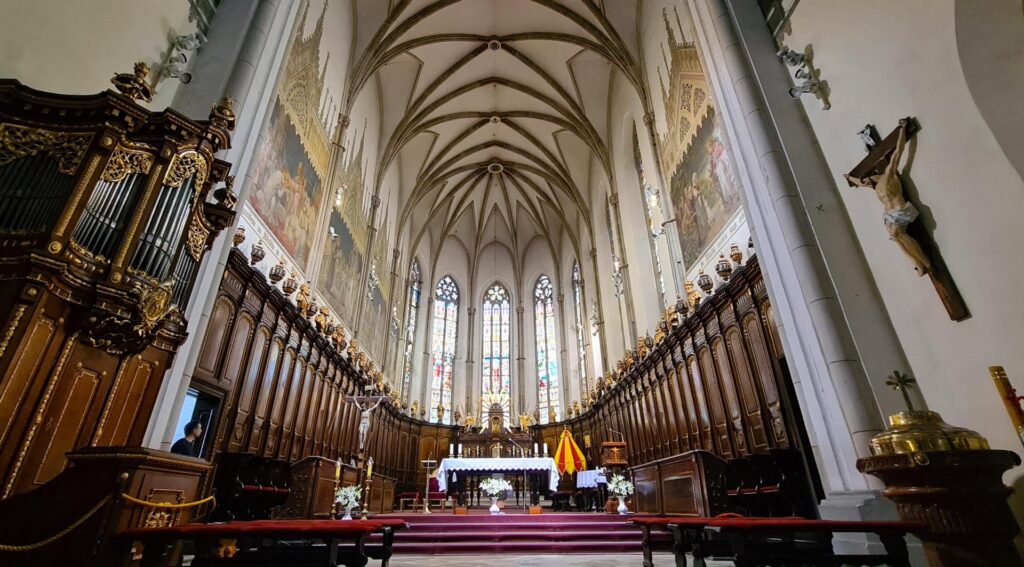
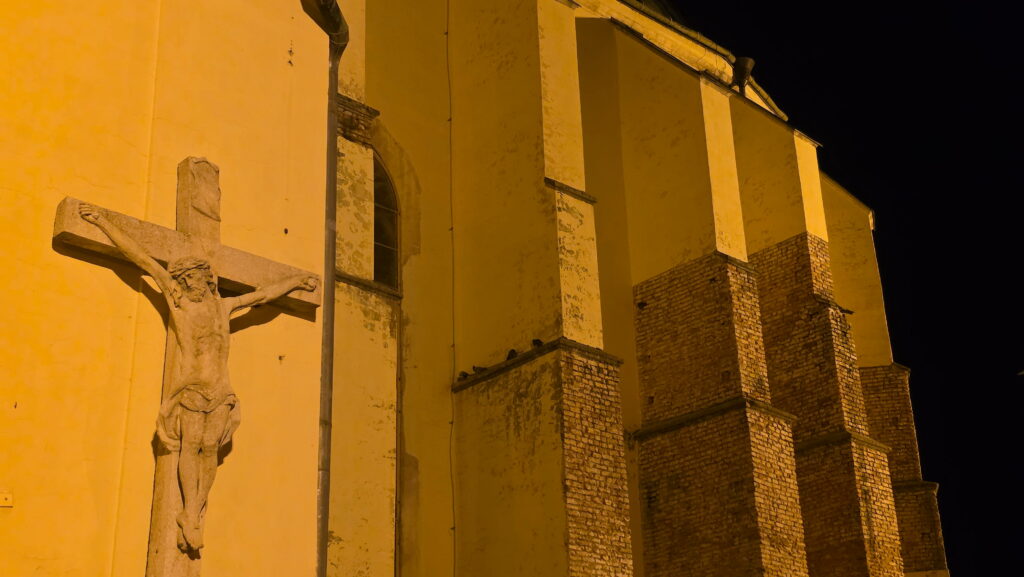
The Basilica of St. Nicholas is a monumental three-aisled Gothic church measuring 60 metres in length and 31 metres in width, with the main nave reaching a height of approximately 18 metres. Its surviving Gothic features include ribbed vaults, tall windows with stone tracery, the southern portal, a pastophorium in the sanctuary and numerous stonework details.
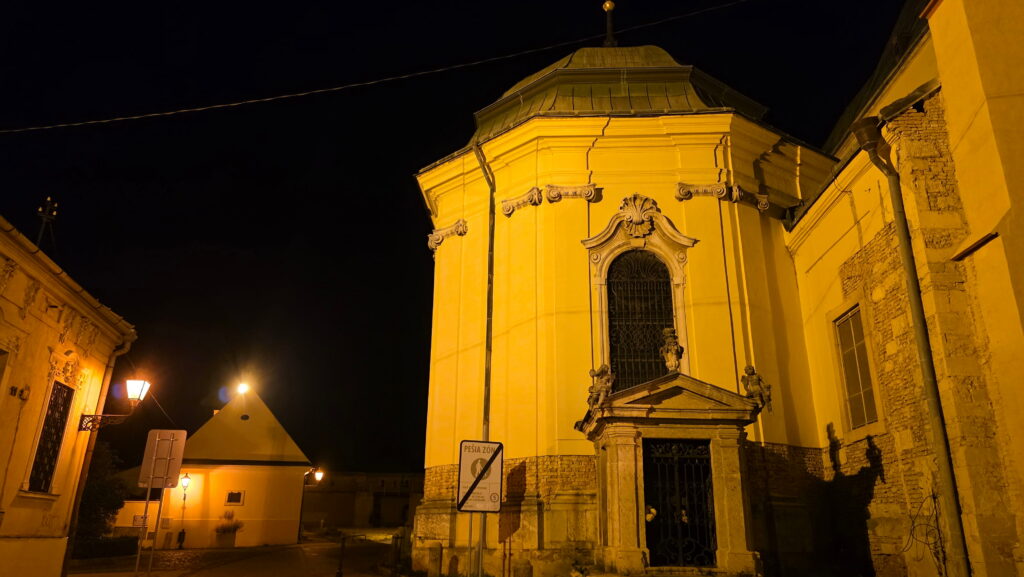
The present-day interior, however, is not purely Gothic. The most significant changes came in the 17th century, when side chapels were added along with new altars, pews, a pulpit and a choir loft. The result is a medieval church enriched by a distinctive Baroque layer.
Among its most impressive features are the chancel with tall stained-glass windows and the Chapel of Our Lady of Trnava, added between 1739 and 1741.
The basilica is still an active church
The Basilica of St. Nicholas is an active parish and pilgrimage church. Visitors are also welcome to attend public Masses and other liturgical celebrations. During services, please respect the sacred character of the church and maintain appropriate silence.
From a medieval parish church to a cathedral
The site has an even longer history than the present Gothic building. A Romanesque parish church once stood here and is connected with the earliest written record of Trnava, dating from 1211. Part of its foundations was uncovered during reconstruction work in the 20th century.
Construction of the present church began in the 14th century. It was built in one of the oldest parts of the town, close to the former marketplace and the intersection of important trade routes. Its dedication to St. Nicholas also reflects this mercantile setting, as St. Nicholas was a patron saint of merchants.
A major turning point came in 1543. Due to the Ottoman threat to Esztergom, the Archbishop of Esztergom and the cathedral chapter moved to Trnava, and the Church of St. Nicholas became the metropolitan cathedral of the Archdiocese of Esztergom. It retained this role until the archbishop and chapter returned to Esztergom in 1820.
After the establishment of Czechoslovakia, it once again became a cathedral church in 1918. In 1977, however, cathedral status passed to the Church of St. John the Baptist. In 2008, St. Nicholas was designated a Marian pilgrimage site and Pope Benedict XVI granted it the title of minor basilica.
Did you know?
A precious chalice was hidden inside the tower walls for more than a century
During restoration work on the northern tower in 2024, workers discovered a gilded silver Late Gothic chalice hidden inside a cavity in the masonry. According to its inscription, it dates from 1520, while a 19th-century parish inventory described it as the oldest chalice belonging to the church.
Following its discovery, the chalice returned to its original purpose and is now used during liturgical celebrations in the basilica.
Our Lady of Trnava and a centuries-old pilgrimage tradition
The most important pilgrimage site within the basilica is the Baroque chapel housing the image of Our Lady of Trnava. According to parish tradition, the image was created as a copy of a Marian icon from the Church of Saints Boniface and Alexius in Rome and was brought to Trnava in 1585. Its artist is unknown.
Several events associated with the image became part of the city’s religious tradition. According to later records, bloody tears were said to have appeared on the image in 1663 during a period of Ottoman threat.
The events of 1708 are documented in greater detail. The image was reportedly observed shedding tears on 5 July, 10 August and 11 August. A subsequent Church investigation was conducted by a 14-member commission, while 32 eyewitnesses gave testimony under oath. Public veneration of the image was later officially approved by the Church.
Another important event came during the plague epidemic of 1710. On 20 November, the city magistrates made a solemn vow, and the following day a procession carrying the image took place. Church tradition attributes the subsequent retreat of the epidemic to the intercession of the Virgin Mary.
For this reason, 21 November remains an important date in Trnava’s Marian tradition. Since 1944, the Trnava Novena has been held every year from 13 to 21 November, attracting pilgrims from Slovakia and abroad.
Look out for
Medieval frescoes
Original wall paintings depicting saints, symbols of the Evangelists and the coat of arms of Trnava have survived beneath the choir loft.
Coats of arms on the Gothic vaults
The stone bosses of the main nave feature the coats of arms of Sigismund of Luxembourg, Albert of Habsburg and the city of Trnava.
Archbishops’ epitaphs
Renaissance and Baroque epitaphs of prominent Archbishops of Esztergom recall the period when the church served as a cathedral.
Historic organs
The basilica is home to important historic organs and remains one of Trnava’s major venues for organ music. The church was also associated with composer and Trnava native Mikuláš Schneider-Trnavský.
Practical information
Address:
M. Schneidera-Trnavského 3, 917 01 Trnava
Admission:
Free admission
Recommended visit duration:
30–45 minutes
Tourist opening hours: May, June, September and October
- Monday: 10:00–16:00
- Tuesday–Friday: 10:00–12:30 and 14:00–16:00
- Saturday: tourist visits are limited due to weddings
- Sunday: 14:00–17:00
Tourist opening hours: July and August
- Monday: 10:00–18:30
- Tuesday–Friday: 10:00–12:30 and 14:00–17:00
- Saturday: tourist visits are limited due to weddings
- Sunday: 14:00–17:00
Mass schedule
- Monday–Friday: 16:00, 18:30
- Saturday: 10:00 (Marian Mass), 18:30
- Sunday: 7:30, 9:00 (Latin Mass), 10:30, 12:30 (Greek Catholic Divine Liturgy in Ukrainian), 18:30
Where to find the Basilica of St. Nicholas
The Basilica of St. Nicholas is located in the eastern part of Trnava’s historic centre on St. Nicholas Square, just a few minutes’ walk from Trinity Square. The main entrance to the church faces St. Nicholas Square, while the official address is M. Schneidera-Trnavského 3.
Frequently asked questions
The basilica is located in Trnava’s historic centre on St. Nicholas Square, in one of the oldest parts of the city.
No. Regular tourist admission to the Basilica of St. Nicholas is free.
Regular tourist opening hours apply from May to October and vary depending on the month and day of the week. As this is an active church, visitors are also welcome to attend public services.
Not today. From 1543 to 1820, the church served as the metropolitan cathedral of the Archdiocese of Esztergom, and after 1918 it once again served as a cathedral for a period of time. Since 1977, the cathedral church of the Archdiocese of Trnava has been the Cathedral of St. John the Baptist.
Our Lady of Trnava is a Marian image housed in a dedicated Baroque chapel inside the basilica. It is associated with a centuries-old religious tradition, accounts of the image shedding tears and the annual Trnava Novena.
We recommend approximately 30 to 45 minutes for a relaxed visit to the main nave, chapels and the most important architectural and artistic details.