Share your photos, tips and experiences from Trnava and its surroundings.
Join the group ↗

Day trips from Trnava
Trnava is an ideal starting point for exploring western Slovakia. Just a few dozen minutes from the city, you will find fairy-tale castles, medieval fortresses, historic spa towns, caves and hiking trails in the Little Carpathians. Whether you are planning a short afternoon outing or a full-day adventure, there is plenty to discover around Trnava.
We have selected 15 day trips from Trnava, from popular Smolenice and Piešťany to lesser-known historical landmarks and scenic natural spots. Each destination includes its main attractions and practical advice to help you plan your visit.
Where to go on a day trip from Trnava?
Most popular day trips: Smolenice · Piešťany · Červený Kameň · Modra · Skalica
Manor houses and spas: Dolná Krupá · Hlohovec · Budmerice · Voderady · Smrdáky
Nature and outdoor activities: Katarínka · Dobrá Voda · Ostrý Kameň · Cycling · Reservoirs
Smolenice – a fairy-tale castle, a cave and hiking in the Little Carpathians
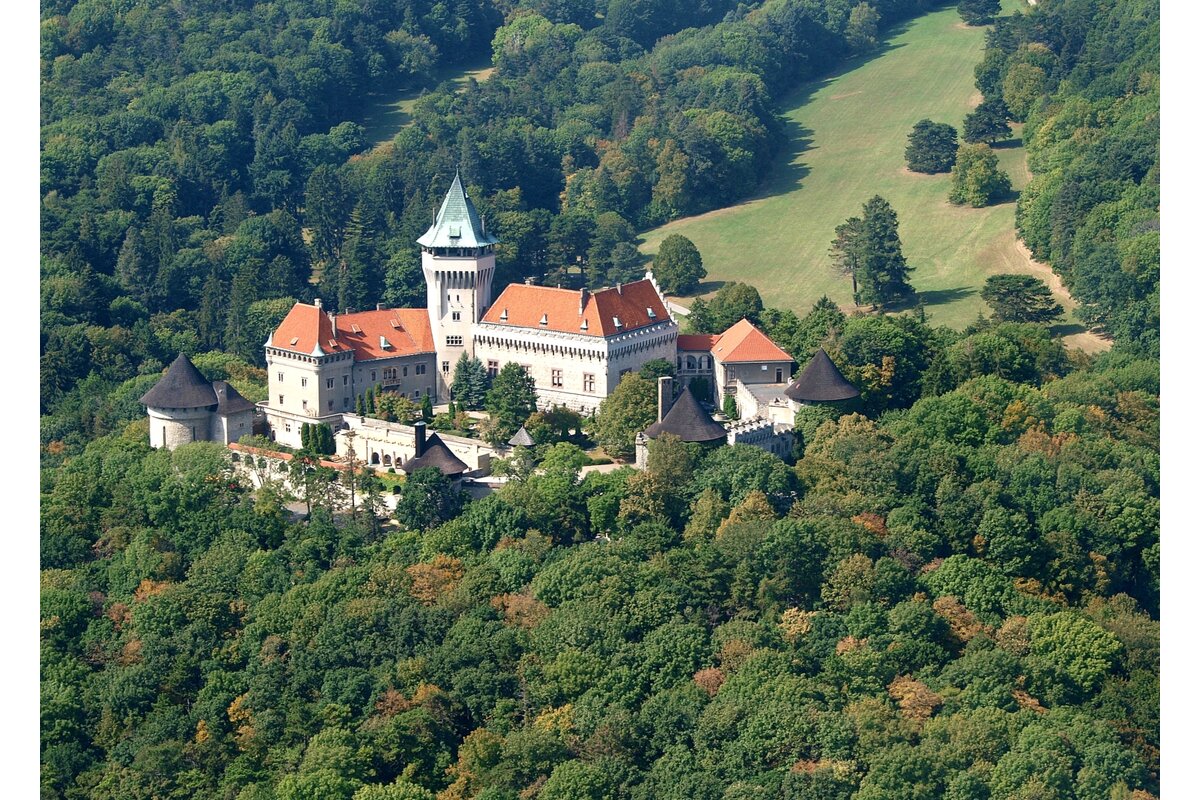
Smolenice is one of the most attractive day-trip destinations near Trnava. Set at the foot of the Little Carpathians, the village offers a romantic castle, the only cave open to visitors in western Slovakia and hiking routes to the mountain range’s highest peak. With so much to see, you can easily spend an entire day here.

What to see and do in Smolenice
- Smolenice Castle: a romantic residence of the Pálffy family that looks like something out of a fairy tale. It stands on the site of an older medieval castle and is also used by the Slovak Academy of Sciences. Interior tours are available according to the current visitor schedule.
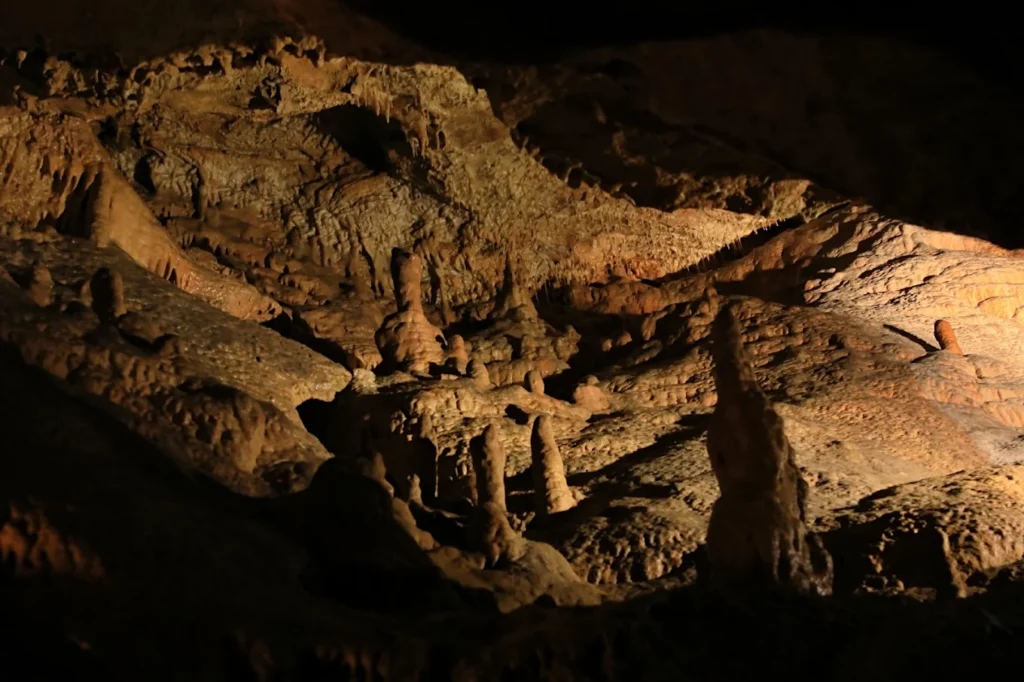
- Driny Cave: an accessible route of approximately 450 metres leads through narrow fissure passages decorated with impressive calcite formations. The cave opens seasonally and reaching its entrance involves an uphill walk from the car park.
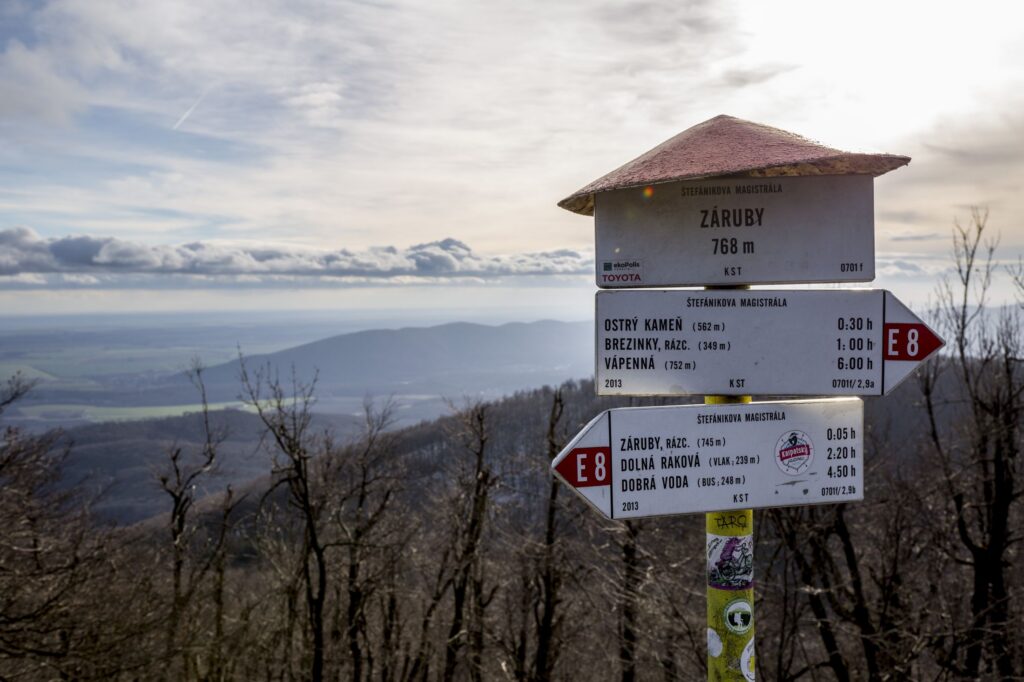
- Záruby: at 768 metres above sea level, this is the highest peak in the Little Carpathians. The ascent is suitable for hikers with a basic level of fitness, although some sections are steep and rocky.
- Molpír: an archaeologically important Iron Age hillfort above the village, combining history, nature and views of the surrounding countryside.
- Hlbočianska Valley: a popular hiking area with Hlbočiansky Waterfall, which is most impressive after heavy rain or during the spring snowmelt.
- Včelovina: a local mead producer offering visitor experiences, tastings and an introduction to traditional mead-making.
Practical tip: If you want to combine the castle with the cave or other attractions, check whether the seasonal Smolenická fčela shuttle is running. Depending on its current operating schedule, this tourist train or minibus can help visitors travel between selected sites. It is best to plan the more demanding hike to Záruby as a separate activity.
Recommended time: A full day. Smolenice is around 20 kilometres from Trnava and can be reached by car, train or regional bus. Driving takes about 20 minutes, while a local train takes 25 minutes. Bus journeys may take 37 to 47 minutes. The attractions are spread out, however, so plan the order of your stops in advance.
Piešťany – a spa island, a historic town centre and cruises on the Váh River
Piešťany is one of Slovakia’s best-known spa towns. British newspaper The Guardian even included it among Europe’s 10 best spa towns. Just around half an hour’s drive from Trnava, you can swap the historic streets of Little Rome for elegant spa promenades, parks and the banks of the Váh River. It is an excellent choice for a relaxed day trip without strenuous hiking.
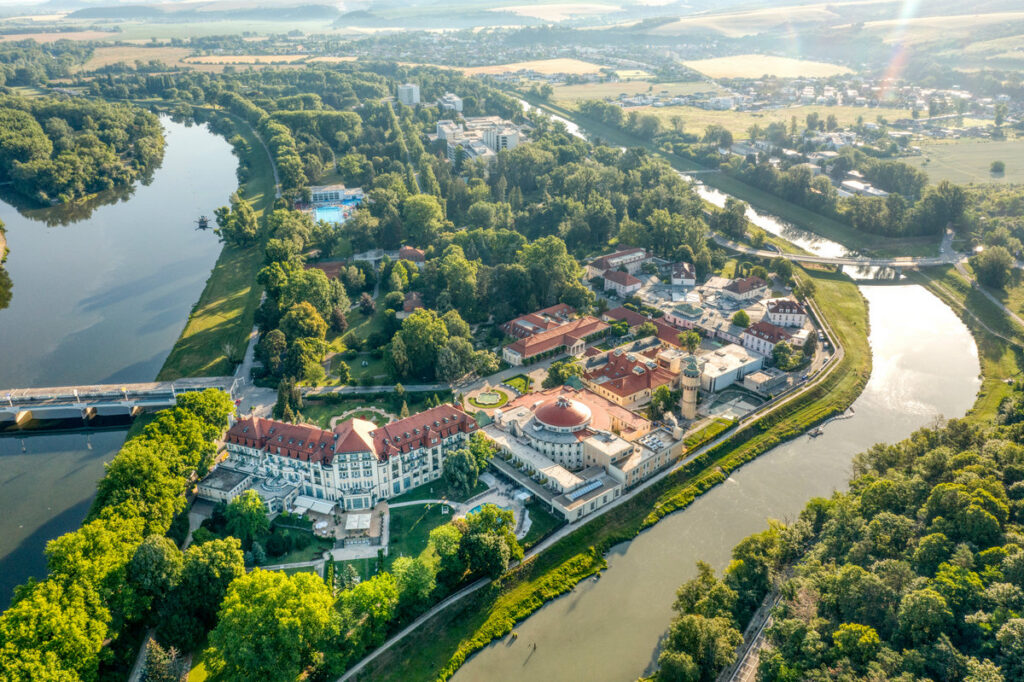
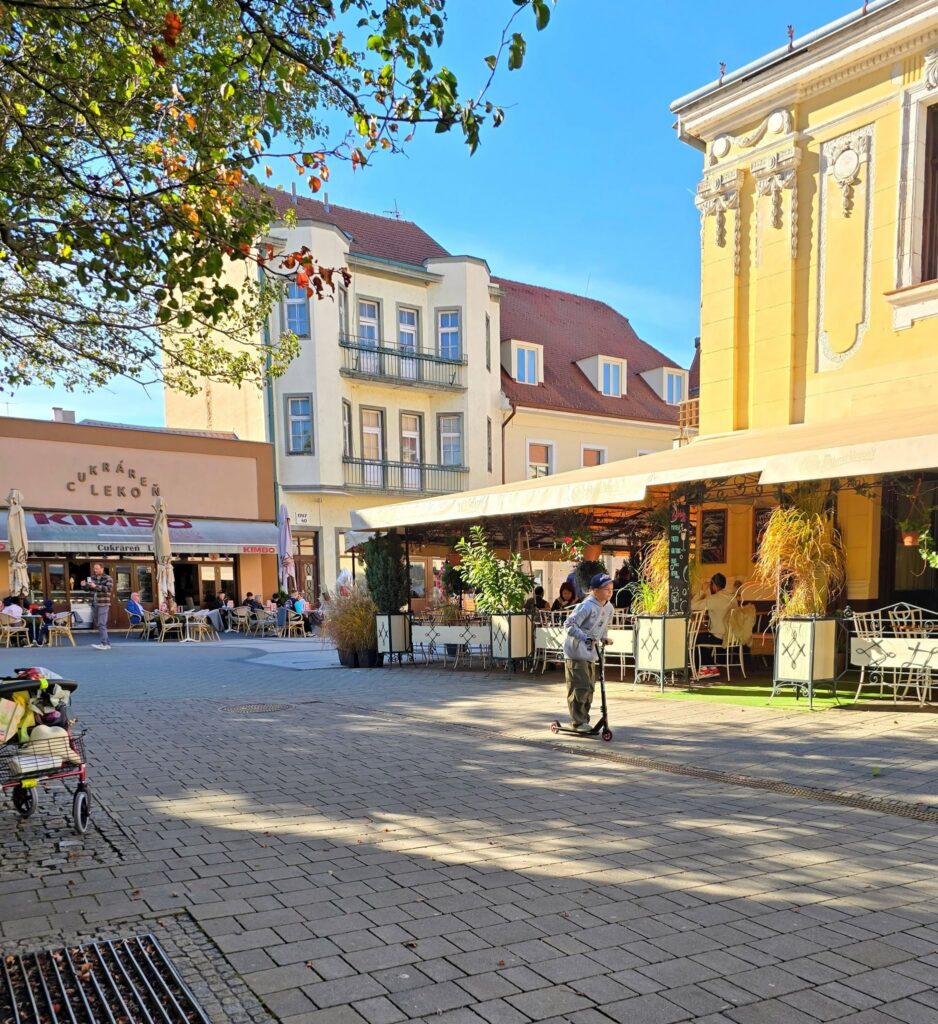
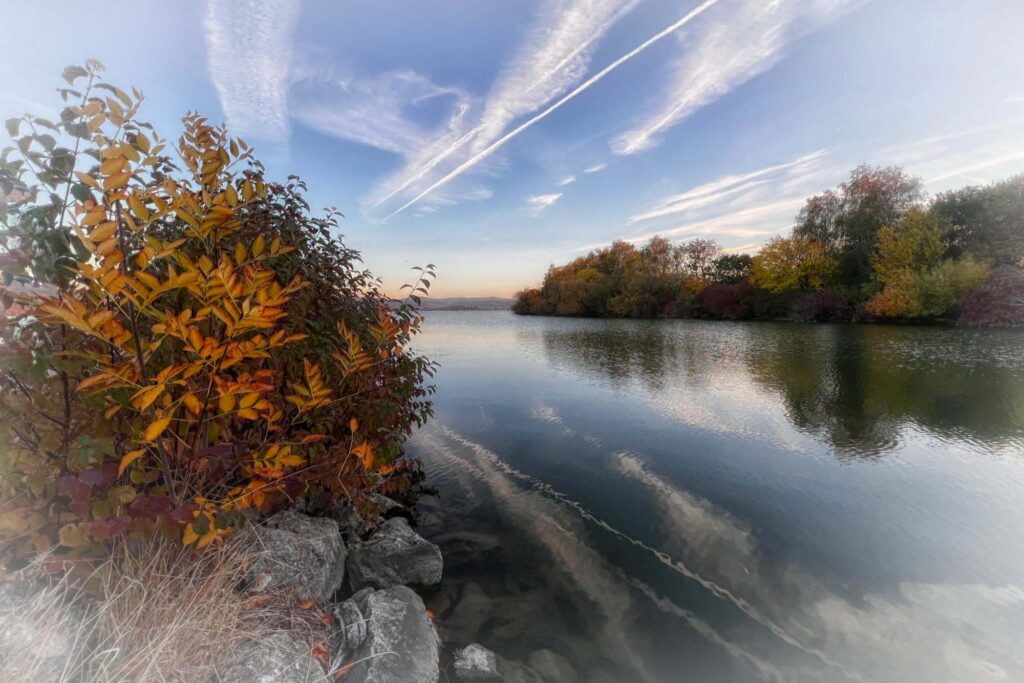
Piešťany’s best-known landmark is the Colonnade Bridge, featuring the famous statue of a man breaking his crutch, which connects the town centre with Spa Island. The island is home to historic spa buildings, including the Art Nouveau Thermia Palace hotel, landscaped parks with peacocks, other rare birds and free-roaming animals, and peaceful places to relax. In the town centre, stroll along Winterova Street, visit the Imrich Winter Balneological Museum or take a break in a local café.
During the tourist season, sightseeing cruises on the Váh River and Sĺňava Reservoir are another enjoyable option. Routes and departure dates depend on the operator, weather and time of year. You can also enjoy a waterside walk or cycle around Sĺňava.
Recommended time: A full day. Piešťany is easy to reach from Trnava by car, train or bus. The drive takes approximately 30 minutes, while an express train gets you there in just 23 minutes. Buses are less convenient, taking about 55 minutes. The historic centre and Spa Island are easy to explore on foot at a leisurely pace.
Červený Kameň Castle – an imposing fortress with vast underground cellars
Červený Kameň Castle is one of Slovakia’s most important and best-preserved historic residences. Situated above the village of Častá on the eastern slopes of the Little Carpathians, it is approximately half an hour’s drive from Trnava. Its present appearance was strongly influenced by the wealthy merchant and noble families of Fugger and Pálffy.
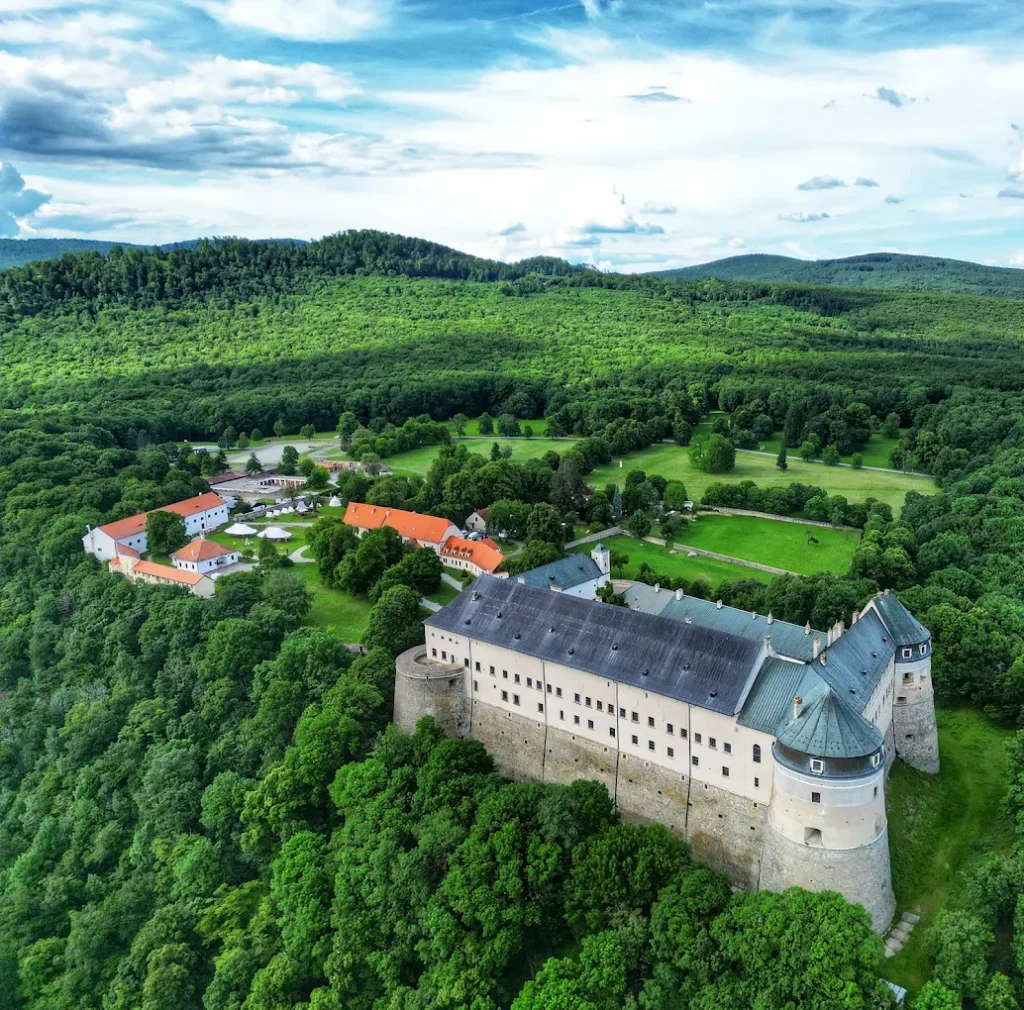
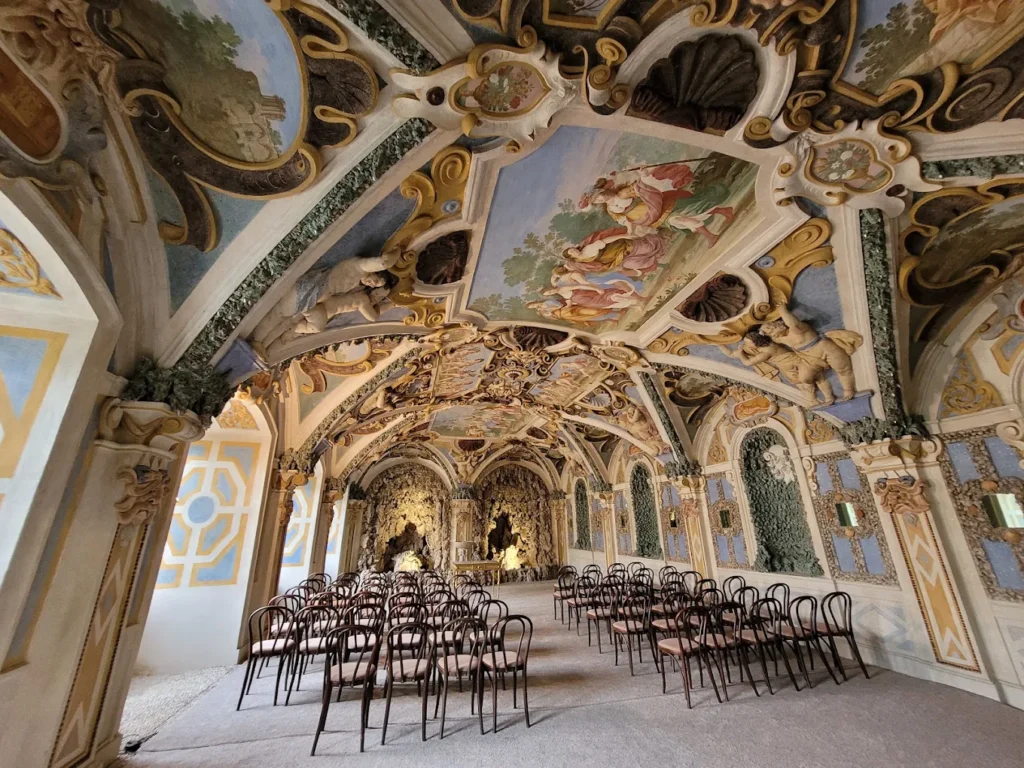
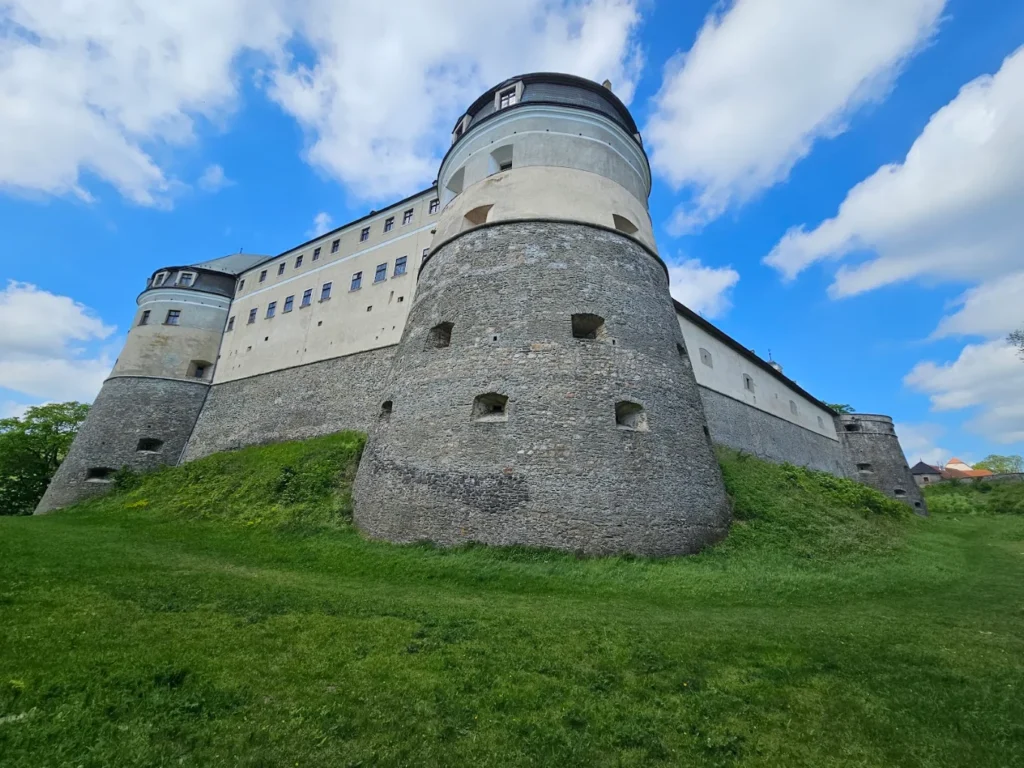
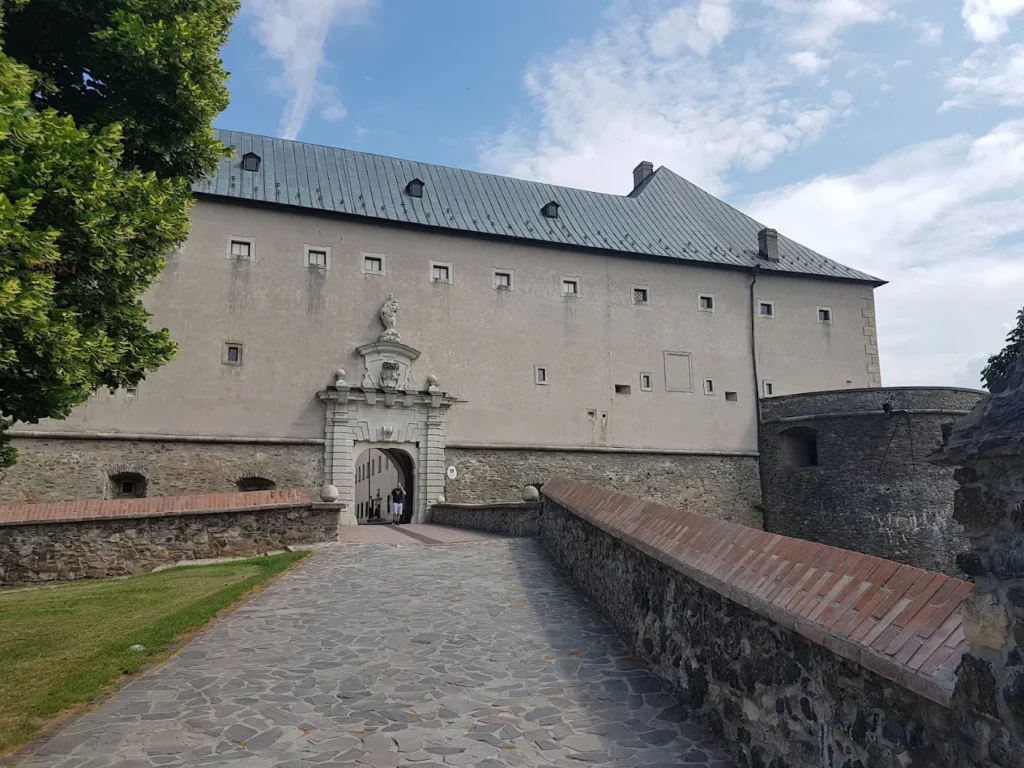
The main highlights are its Renaissance fortifications, extensive cellars and historic interiors filled with furniture, paintings and art collections. The enormous cellars were originally used to store goods and are among the castle’s most remarkable features. Guided tours also introduce visitors to the grand living quarters of its former owners.
The castle offers several guided tour routes and hosts themed events throughout the year. You can combine a visit with a walk in the surrounding countryside or a trip to nearby wine-growing villages in the Little Carpathians.
Before you visit: The castle interiors can be visited on organised tours. Routes, admission times and the availability of tours in foreign languages may change seasonally. Check the Slovak National Museum website for up-to-date information.
Recommended time: Around 2 to 4 hours, depending on your chosen tour. Červený Kameň is approximately 24 km from Trnava, with a drive of about 30 minutes. You can also travel by bus: route 555 departs from the bus station or the Zelený kríček stop and takes 39 minutes to the Častá-Červený Kameň stop.
Modra – a town of wine, ceramics and Ľudovít Štúr
Modra lies at the foot of the Little Carpathians and has been one of the region’s leading wine-producing towns for centuries. Alongside its wines, it is renowned for traditional Modra ceramics and its association with Ľudovít Štúr, an important figure in Slovak history who spent his final years here.
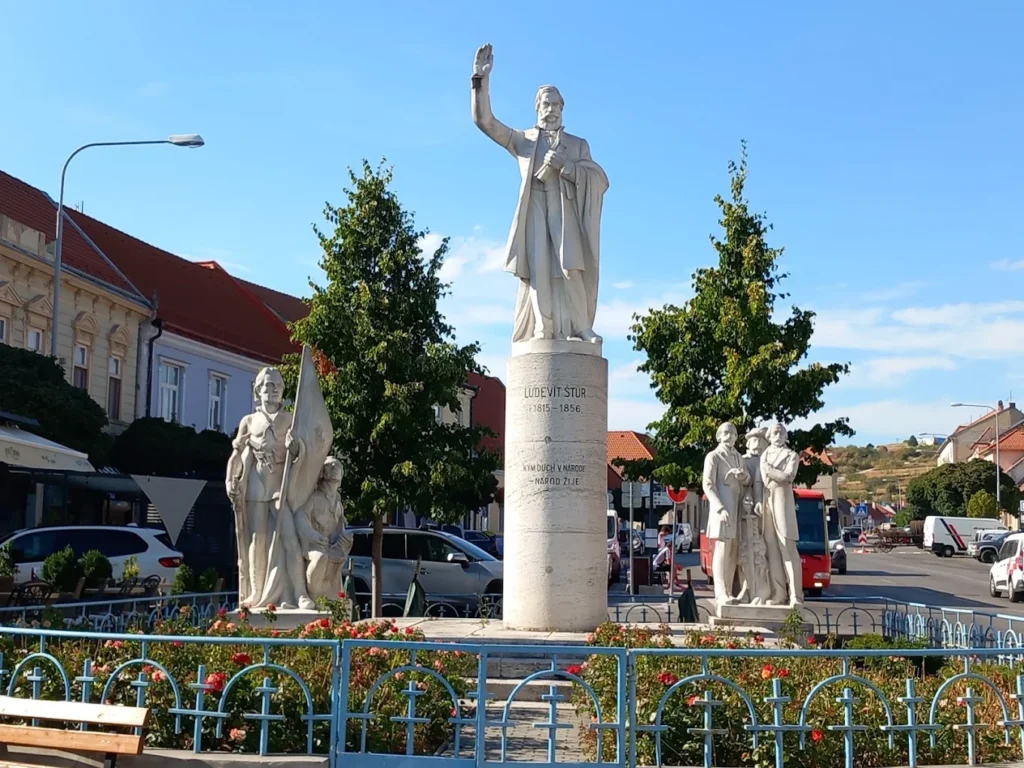
As you walk through the centre, you can admire historic townhouses, churches and remains of the old town fortifications. The Museum of Slovak Ceramic Sculpture, displaying works by traditional and contemporary ceramic artists, is well worth a visit. Exhibitions run by the Slovak National Museum also explore the life and legacy of Ľudovít Štúr.
Vineyards surround Modra, making its wine culture an essential part of a visit. We recommend winery tastings or visits to ceramics workshops. If you prefer outdoor activities, hiking trails lead from Modra into the Little Carpathians, including the popular Harmónia recreation area.
Recommended time: Half a day to a full day, depending on your plans. Modra is 25 kilometres from Trnava and about 25 minutes away by car. The bus journey takes approximately 40 minutes, with stops at the bus station, Zelený kríček and Kamenný Mlyn. Modra is ideal for combining a historic town centre with local food, wine and crafts.
Skalica – historic landmarks, trdelník and the Baťa Canal
Skalica, near the Slovak–Czech border, is one of western Slovakia’s most historically interesting towns. It is known for its preserved monuments, winemaking traditions and a local speciality, Skalický trdelník, a sweet pastry baked on a rotating spit. It lies a little farther from Trnava than the previous destinations and is best enjoyed as a full-day trip.
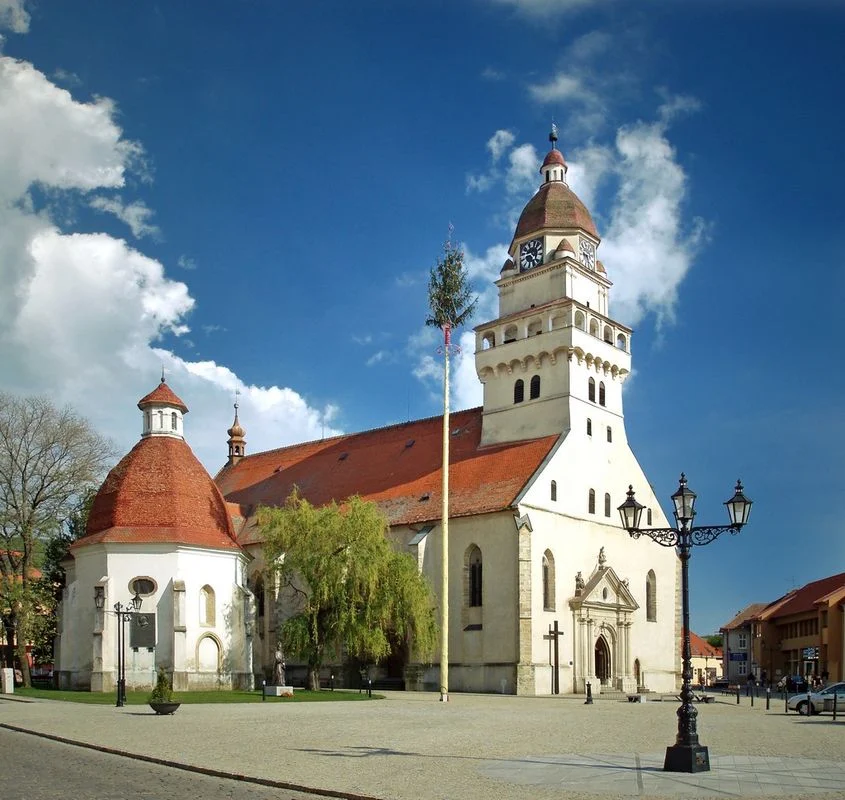
A particular highlight of the historic centre is the Romanesque Rotunda of St George, one of the town’s oldest surviving monuments. Nearby are remains of the town walls and other historic buildings. The churches, main square and exhibitions at the Záhorie Museum are also worth seeing. Skalica is also famous for its wine culture and the traditional red wine Skalický rubín.
Another distinctive attraction is the Baťa Canal, a historic waterway along the Slovak–Czech border. Sightseeing cruises operate during the season, giving visitors a different perspective on the surrounding landscape. Some longer cruises travel as far as Strážnice in the Czech Republic and can take up a substantial part of the day.
If you have more time, extend your trip to nearby Holíč to see its historic château and windmill.
Recommended time: A full day. Skalica is approximately 65 km from Trnava, and the drive takes about an hour. Travelling by bus takes around 1 hour and 40 minutes. Baťa Canal cruises run seasonally, so booking ahead is recommended.
Dolná Krupá – a manor house, Beethoven and the Rose Countess
Just 11 kilometres north of Trnava lies Dolná Krupá, home to one of Slovakia’s most important Neoclassical aristocratic residences. The local manor house is associated with the Brunsvik family, musical history and the composer Ludwig van Beethoven.
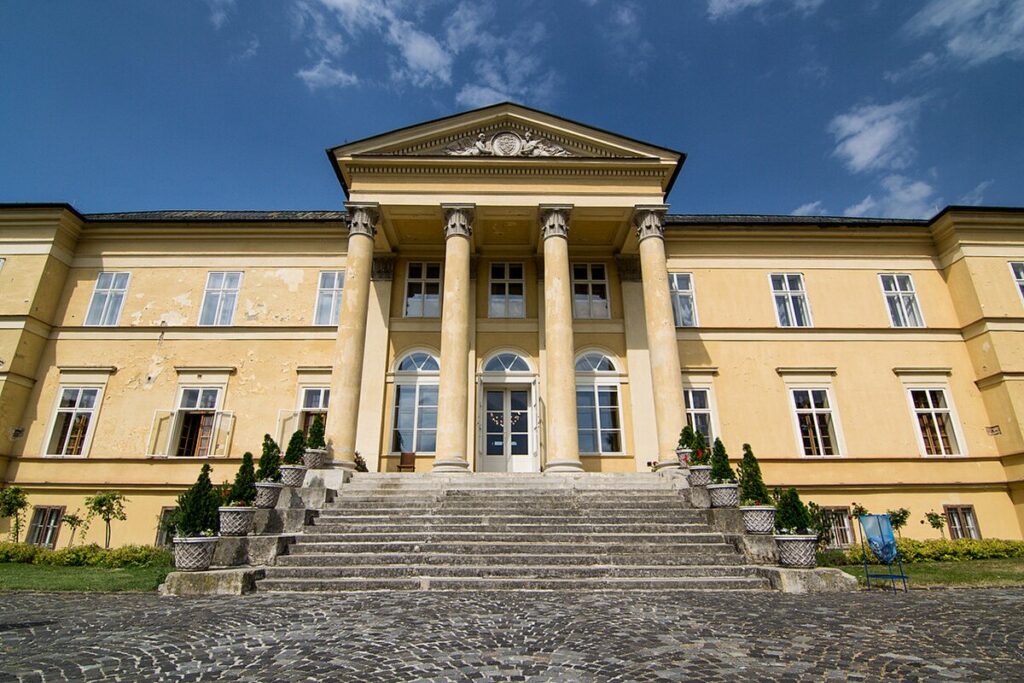
The estate now houses a branch of the Slovak National Museum – Music Museum. Visitors can discover the history of the residence, its musical heritage and the Ludwig van Beethoven Memorial. The manor is surrounded by a historic English-style park with a pond and rare trees, making it a pleasant place for a walk.
Dolná Krupá is also closely associated with Mária Henrieta Choteková, known as the Rose Countess. Her historic rose garden was once among Europe’s significant rose collections. Today, the local rose-growing tradition lives on at Medolandia, a visitor attraction with a rose garden, mead production and other activities.
Recommended time: Around 2 to 4 hours. The park and manor interiors have different visiting arrangements, so check current access and tour availability before your trip.
Hlohovec – a restored castle and an extensive historic park
Hlohovec is a pleasant choice for a shorter trip from Trnava. Its main landmark is Hlohovec Castle, which developed through successive renovations of an older medieval fortress and served important noble families for centuries. Following extensive restoration, it has gradually become an appealing attraction for visitors.
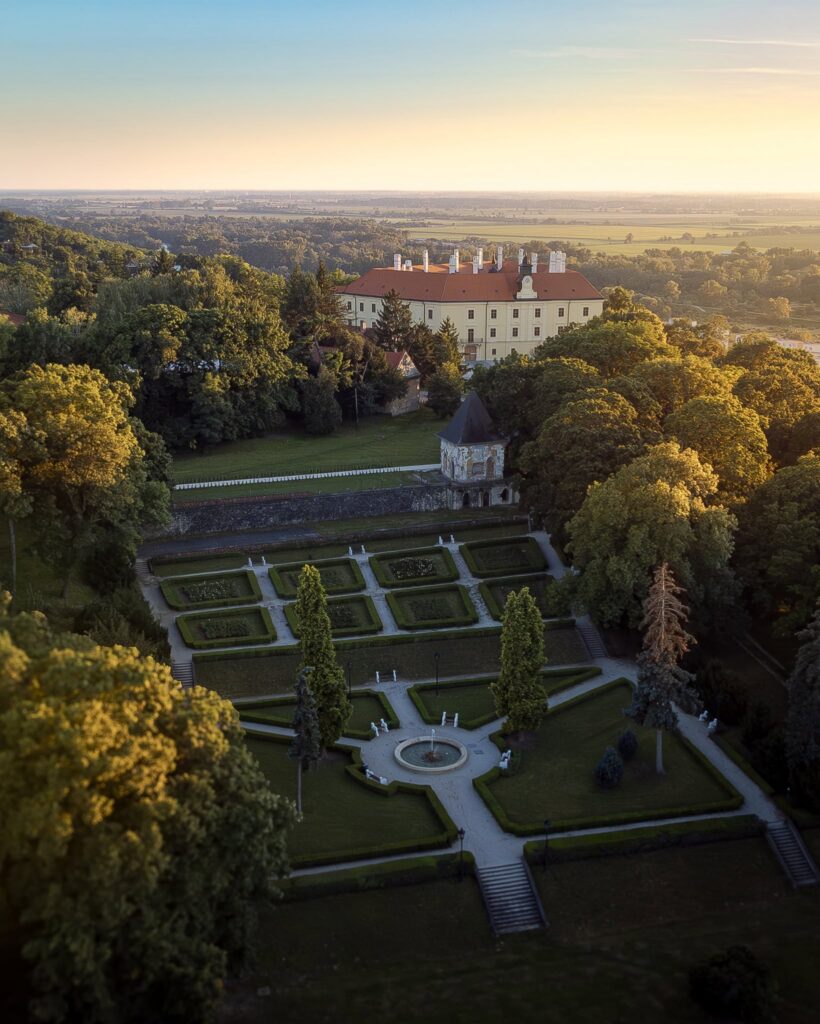
A tour of the castle introduces its history through modern technologies, including virtual and augmented reality. Beyond the building itself, explore the castle gardens, one of the town’s most valuable green spaces. The estate also contains a historic Empire-style theatre.
You can round off your visit with a walk through Hlohovec’s historic centre or along the Váh River. Compared with more distant destinations, it is an easy-going trip that fits comfortably into an afternoon.
Recommended time: Around 2 to 4 hours. Check tour dates and booking arrangements before visiting the castle.
Budmerice Manor House – a romantic aristocratic residence straight out of a fairy tale
Budmerice Manor House is one of the most photogenic historic buildings near Trnava. With its towers, intricate roofline and ornate façade, this romantic residence was built for the Pálffy family in the late 19th century. Its architecture evokes historic French châteaux.
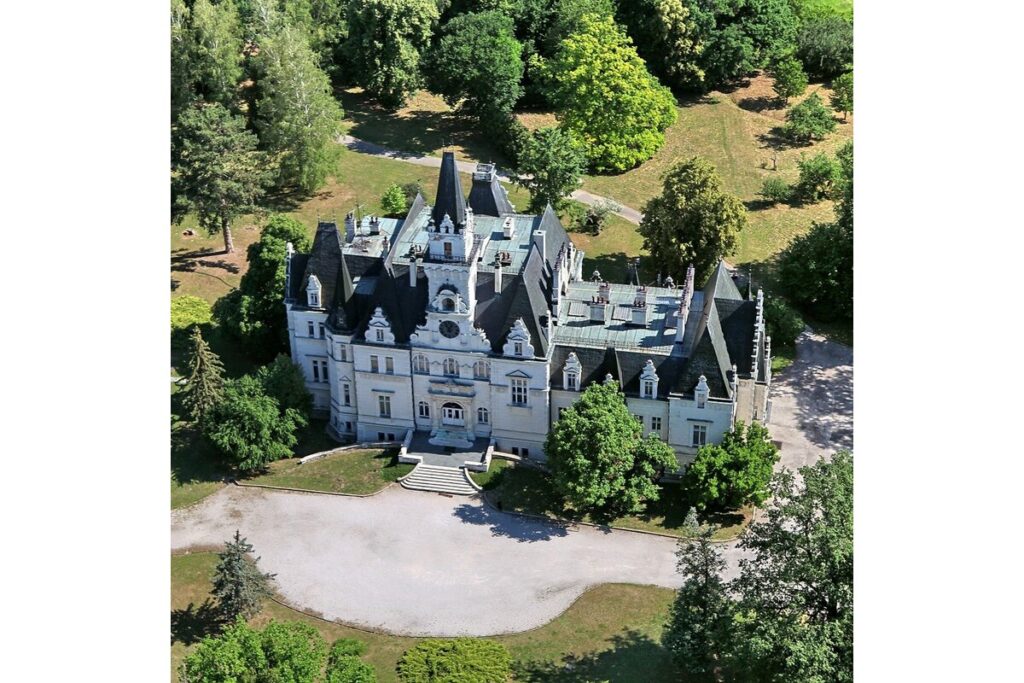
The building is surrounded by a spacious park with rare trees. In the second half of the 20th century, the manor also became known as a retreat for Slovak writers. Today, its main attractions are its architecture and historic atmosphere.
Recommended time: Around 1 to 2 hours. Before visiting, check access to the park and the availability of guided interior tours, as both may change due to restoration work and operating arrangements.
Katarínka – mysterious monastery ruins hidden in the forest
In the forests of the Little Carpathians near Dechtice lie the evocative ruins of the Church and Monastery of St Catherine of Alexandria, known as Katarínka. Built in the 17th century, the Franciscan complex is now one of the region’s most romantic historic sites.
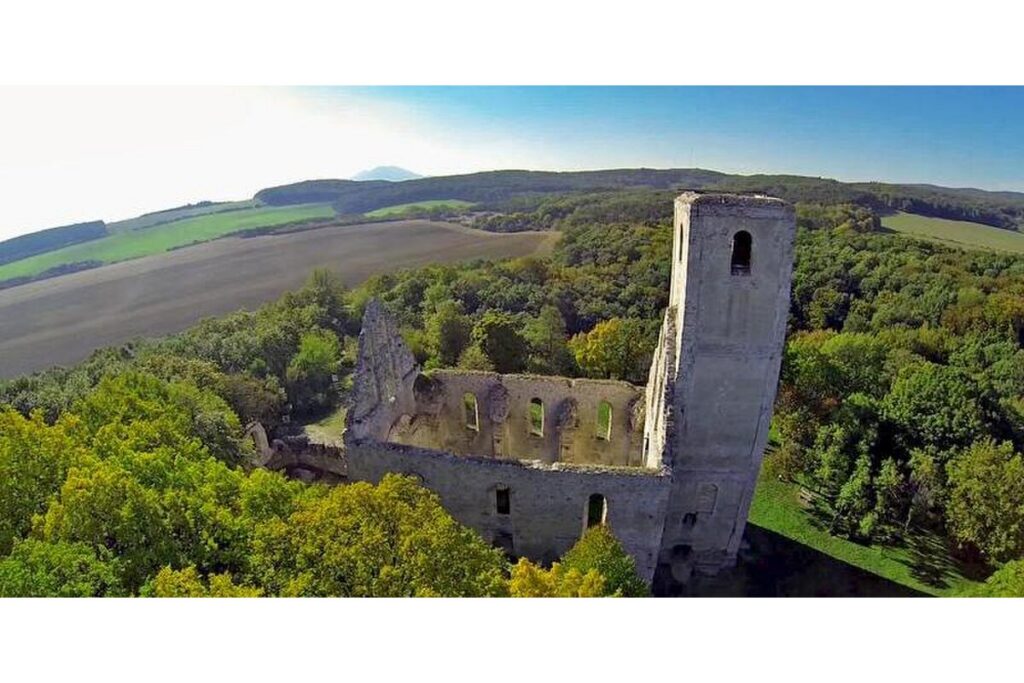
The surviving tall church walls, monastery remains and surrounding woodland create a special atmosphere. An important part of Katarínka’s story is a volunteer conservation project that has protected the ruins for decades and gradually made them more accessible to visitors.
Katarínka can be reached on foot via marked hiking trails. One option is to approach from Naháč, allowing approximately 40 minutes’ walking from a suitable trailhead. A longer route starts in Dechtice. There is no conventional museum with regular opening hours on site, so bring water, wear suitable shoes and be prepared for a walk in the countryside.
Recommended time: Half a day, including the hike. This trip is ideal for visitors who want to combine history with a peaceful woodland walk.
Dobrá Voda Castle – medieval ruins above a forest village
Above the village of Dobrá Voda in the Little Carpathians stand the remains of a medieval castle that once guarded important routes across the mountains. Today, its ruins are a popular destination for shorter hikes.
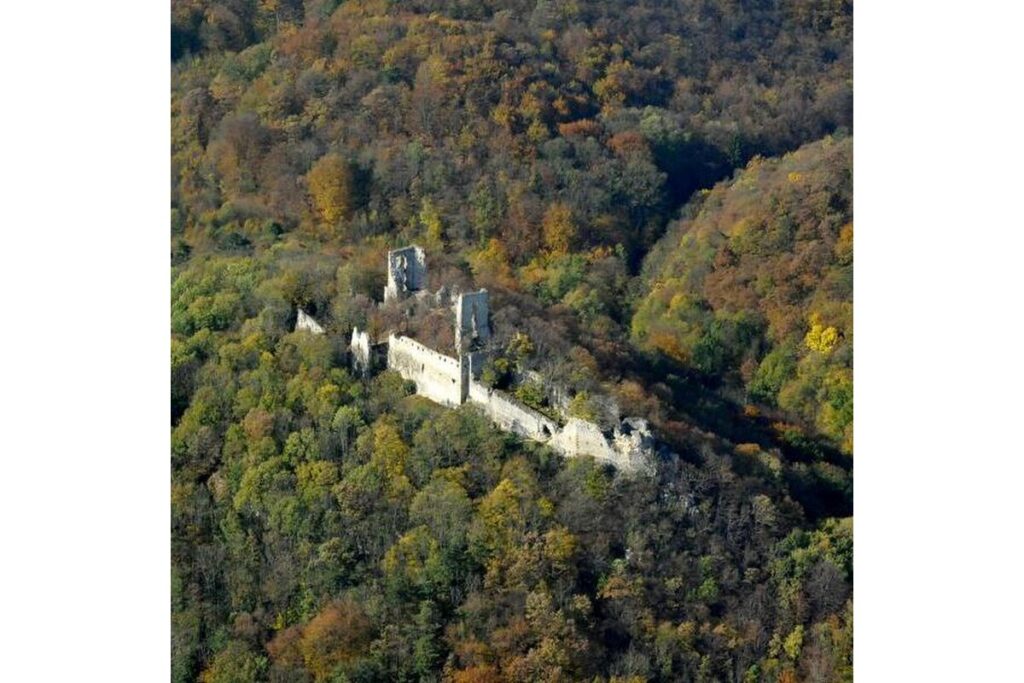
Marked woodland trails lead from the village to the castle. Once there, you can explore the surviving sections of walls, towers and fortifications. The relatively short approach makes Dobrá Voda one of the more accessible castle ruins in the region.
The village is also home to the grave of poet Ján Hollý, who spent his final years in Dobrá Voda. A castle visit can therefore be combined with a brief stop connected to Slovakia’s literary history.
Recommended time: Around 2 to 3 hours, including the walk. The route is suitable for less experienced hikers, although sturdy footwear is necessary.
Ostrý Kameň Castle – hiking with views of the Little Carpathians
Ostrý Kameň Castle stands on a ridge of the Little Carpathians above the village of Buková. Built in the 13th century, the medieval fortress once guarded an important trade route crossing the mountains. Today, picturesque ruins remain amid the forests.
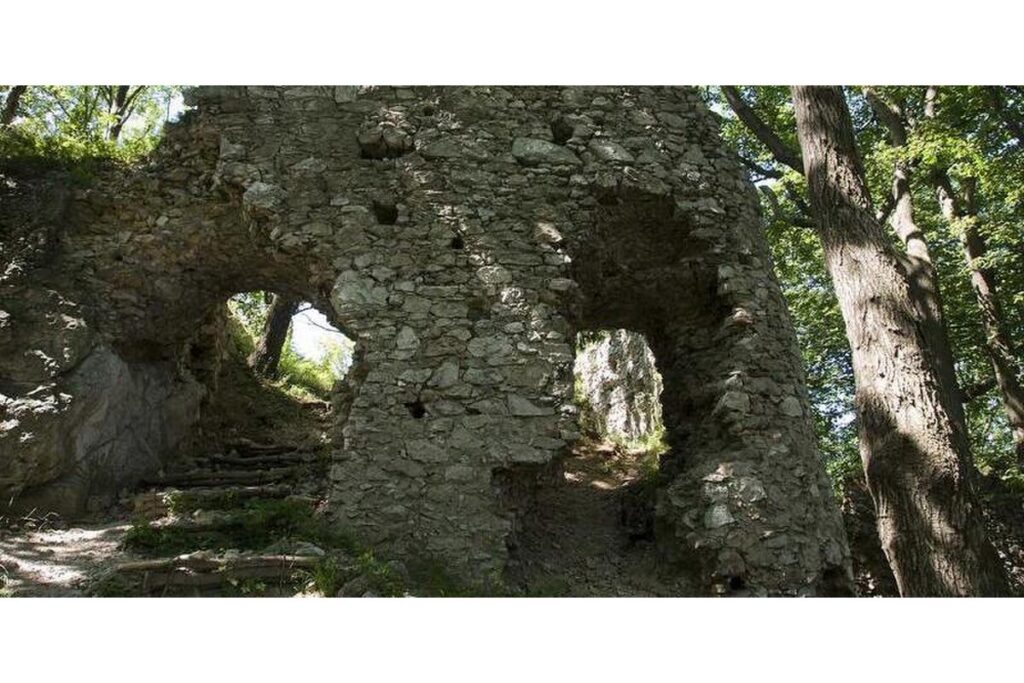
You can reach the castle on a hike starting near Buková Reservoir. A more demanding alternative follows the trail over Záruby from the direction of Smolenice. This route crosses mountain terrain and requires care in several places, particularly in wet or icy conditions.
Ostrý Kameň is therefore ideal for visitors looking for more than a quick stop at a historic monument and wanting to spend several active hours in the Little Carpathians.
Recommended time: Half a day, depending on the route. Bring hiking shoes and water, and be prepared for uphill sections.
Voderady Manor House – a beautifully restored historic landmark near Trnava
Voderady Manor House is one of the most striking examples of historic restoration in the Trnava area. Once an aristocratic residence, it has undergone extensive renovation and now operates as the GOYA Vitality Hotel. Its restoration also received the prestigious Fénix heritage award.
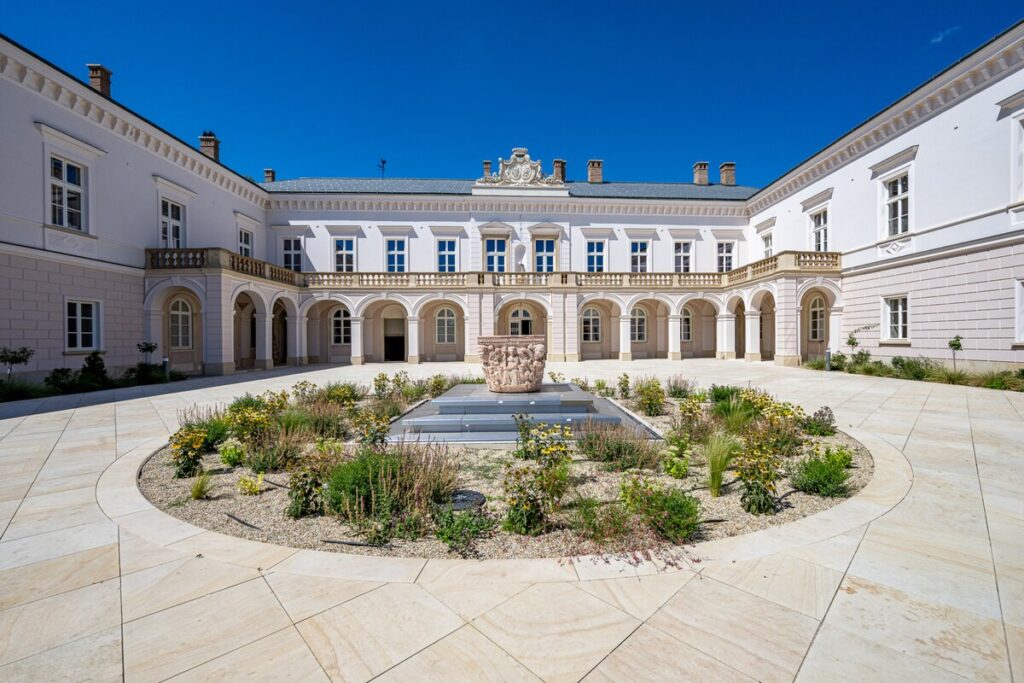
The manor is notable for its elegant architecture, historic park and combination of original features with modern uses. Alongside hotel and dining services, guided tours are organised on selected dates, offering a closer look at the building’s history.
Recommended time: Around 1 to 3 hours. As this is an operating hotel property, access to individual rooms and the park depends on current arrangements. Check available services or tour dates in advance.
Smrdáky Spa – peaceful relaxation and unique sulphur springs
The village of Smrdáky in the Záhorie region is best known for its therapeutic spa. The local mineral springs are rich in sulphur compounds and are used in treatments for skin conditions and musculoskeletal problems. Spa traditions here date back to the 19th century.
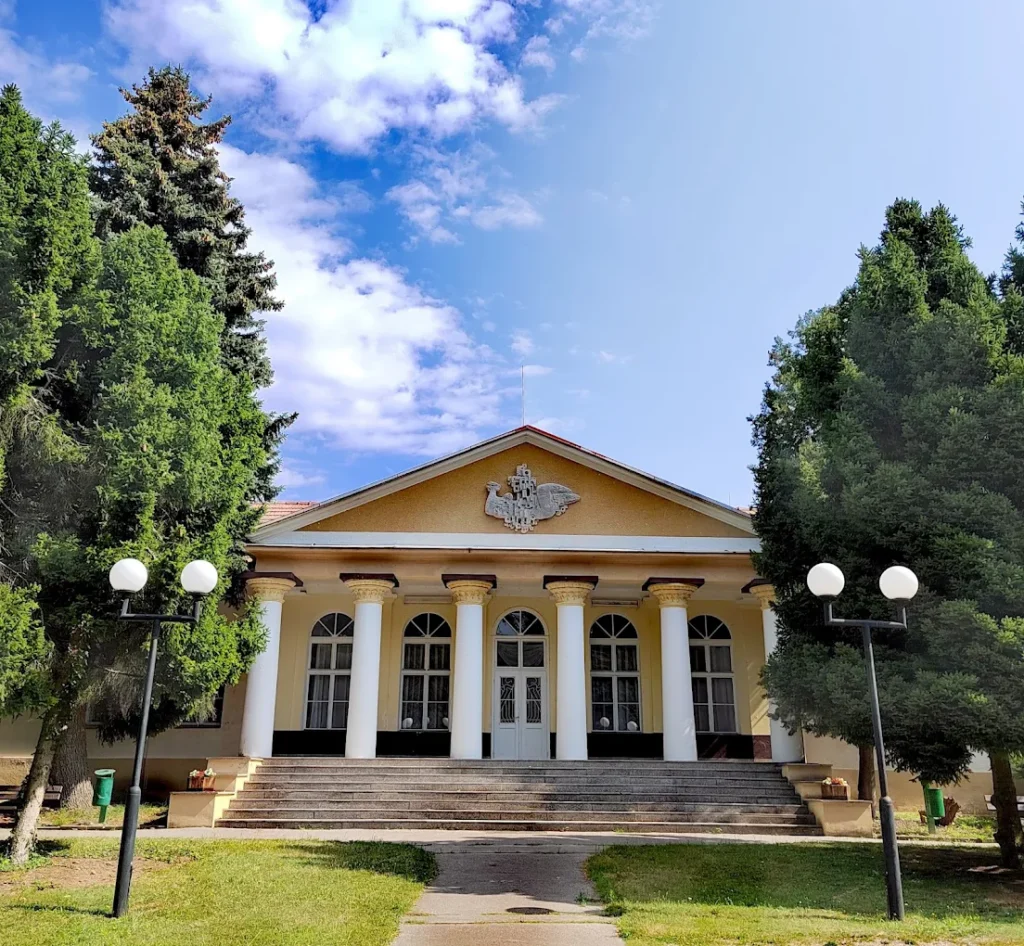
Smrdáky offers a peaceful atmosphere, historic spa buildings and a well-kept park. Unlike large thermal water parks, it focuses primarily on therapeutic stays and treatments. Selected wellness and spa services may also be available to other visitors, but availability should be checked beforehand.
Recommended time: Several hours of relaxation or a longer stay with spa treatments. Smrdáky is particularly suited to visitors who prefer a tranquil setting to busy tourist attractions.
Cycling through the wine-growing villages around Trnava
The area around Trnava is great not only for road trips but also for cycling. The gently rolling landscape beneath the Little Carpathians, vineyards and traditional villages offer pleasant routes for rides lasting several hours. One option is a circular route through villages to the west and northwest of Trnava.
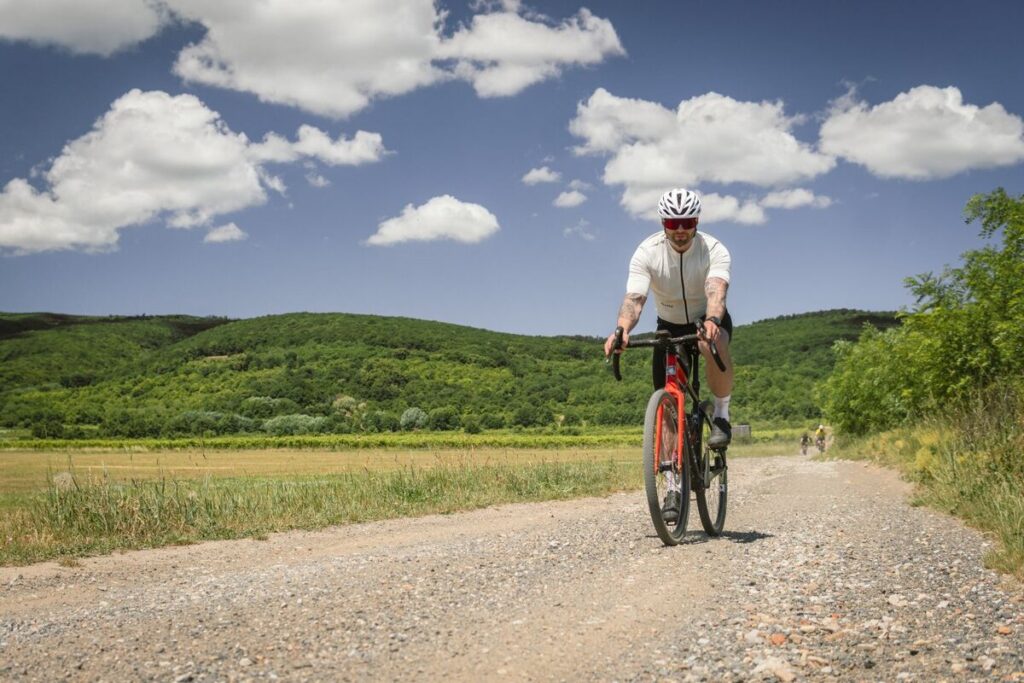
A cycling loop through Suchá nad Parnou and wine-growing villages
Suggested route: Trnava – Zvončín – Suchá nad Parnou – Košolná – Dlhá – Borová – Ružindol – Biely Kostol – Trnava.
Distance: Approximately 33 kilometres.
Difficulty: Easy to moderate, depending on your fitness, the selected sections and weather conditions. An e-bike or electric scooter can make the route less demanding.
The ride takes you through traditional villages and the wine-growing countryside at the foot of the Little Carpathians. Suchá nad Parnou Reservoir makes an interesting stop for a break by the water. Depending on the surfaces you choose, the loop is suitable mainly for trekking and road bikes.
More experienced cyclists can continue towards Horné Orešany and Dolné Orešany, where the terrain gradually becomes hillier. Allow more time and expect a more demanding ride if you extend the route.
Important: Not all sections follow dedicated cycle paths. Parts of the route use ordinary local roads, so check current conditions, traffic and the suitability of each section for your bicycle before setting off.
Reservoirs near Trnava – places for fishing and relaxing by the water
If you prefer a quieter escape into nature, there are several reservoirs near Trnava that are popular with anglers and countryside visitors. Some sit among fields and vineyards, while others lie below the forested slopes of the Little Carpathians. Three places worth considering are Suchá nad Parnou, Boleráz and Buková.
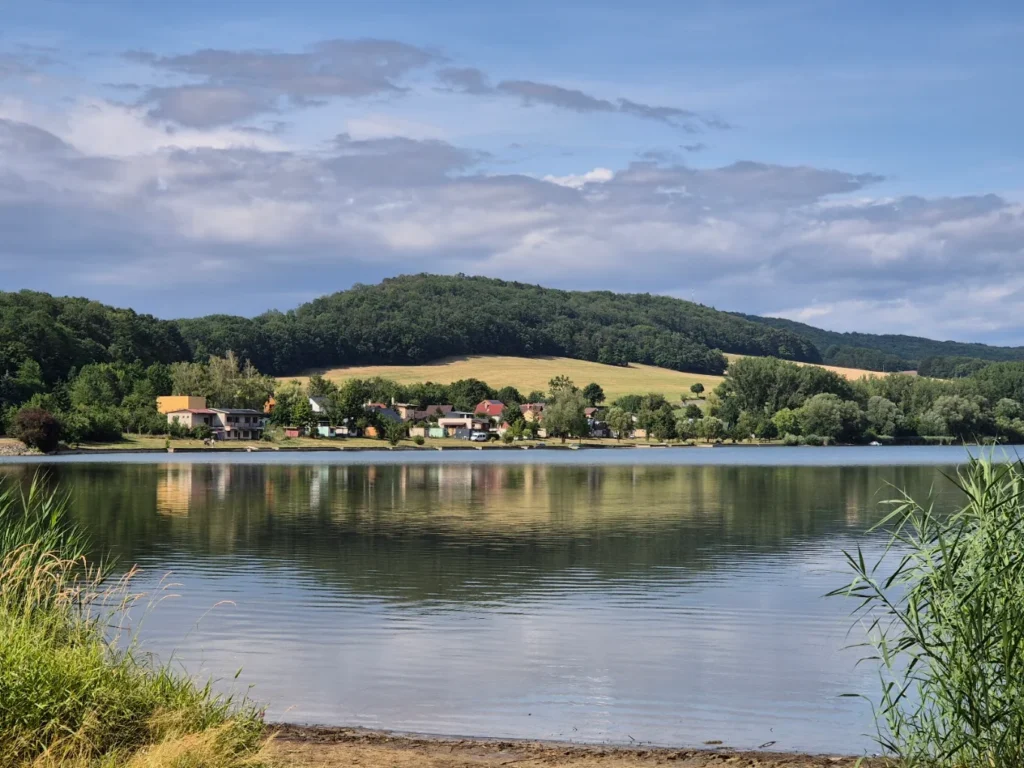
Suchá nad Parnou Reservoir
The reservoir near Suchá nad Parnou is one of the closest larger bodies of water to Trnava. It lies in a peaceful rural setting and is particularly well known among local anglers. A visit can be combined with a bike ride or a walk through the surrounding countryside.
Boleráz Reservoir
The reservoir near Boleráz is another option for fishing enthusiasts and anyone seeking a quiet spot by the water. The surrounding rural landscape lies away from the main tourist routes. Access to different parts of the shoreline may vary depending on local conditions.
Buková Reservoir
Buková is among the most scenic reservoirs in the wider Trnava area. It lies below the wooded slopes of the Little Carpathians and is popular with both anglers and hikers. Its main advantage is the proximity of walking trails leading to Ostrý Kameň Castle and the mountain ridge.
Planning to fish? Fishing at individual reservoirs is subject to the rules of the relevant fishing districts. Check which permits are required and review current restrictions and fishing conditions before you go. Not every reservoir is an officially designated swimming area, so check bathing regulations separately.
How to plan a day trip from Trnava
The best way to plan your trip depends largely on the destination. Towns such as Piešťany, Hlohovec and Modra can also be reached by public transport, while a car is more convenient for certain castles, manor houses and hiking areas. Some attractions require a walk from the nearest car park or public transport stop.
If you plan to visit a cave, castle or manor house on a guided tour, check current opening hours and booking arrangements. When hiking in the Little Carpathians, consider the weather, trail difficulty and daylight hours. Some attractions, particularly sightseeing cruises and seasonal services, are not available throughout the year.
Thanks to its location, Trnava is a great base for combining several shorter trips. During one stay, you can explore historic monuments, head into the Little Carpathians and discover nearby spa and wine towns.